The Death of Worship

Krondstadt-Naval-Cathedral-1024x661I was new to the church, and was just getting to know the small staff I had inherited. The youth director attended another church on Sunday mornings, a charismatic congregation known for its contemporary worship which involved people raising their hands, speaking in tongues, and singing Christian pop music, and a high level of emotion. I came to faith through the Charismatic tradition in the mid-1970s so I was both familiar with and comfortable with that aspect of Christianity.

Youth Sunday was coming, and she was trying to get our small, very Presbyterian youth group ready to lead worship for the service, I worked with the young man who was preaching, and she worked with the rest of the kids on the music. I could tell she was getting frustrated because the kids were not singing the songs the way people sang them at the worship services in her congregation.

“Let’s teach this congregation how to REALLY worship,” she said, trying to pump the kids up.

If I was the firing kind of pastor, I would have fired her there on the spot. (I was happy a few months later when, by mutual agreement, we decided her time with us was over.) I was angrier at her then than I have ever been with any employee or co-worker ever.

“Let’s teach this congregation how to REALLY worship,” she said, as if we had spent the last fifty years wasting our time on Sunday mornings.

“Let’s teach this congregation how to REALLY worship,” she said, as if there were only one real way to worship God.

“Let’s teach this congregation how to REALLY worship,” she said, as if worship was only REAL worship when people had been whipped into an emotional frenzy.

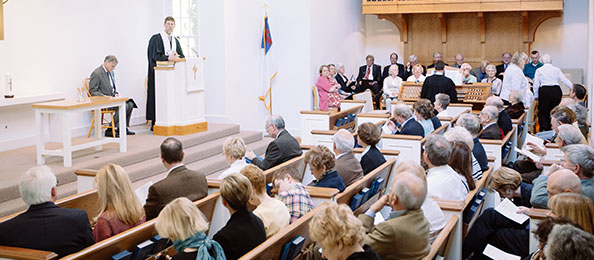
Members of the community pray during Sunday morning worship at New Shiloh Baptist Church, where Freddie Gray's April 27 funeral service was held in Baltimore           I was sure that our congregation did on Sunday mornings was real worship. And I do not have a problem calling Charismatic services real worship. I have been privileged to worship with Orthodox Christians in Russia, and the liturgy they celebrate is certainly worship.

But that was then, back in the early 2000s. Now I am not so sure.

Years later I was sitting with a group of pastors and we were asked what kinds of idols tempted us.  People trotted out the usual suspects—work, the trappings of an affluent society, power, other people, our own desires—all the things that tend to distract us from our faith.

But I was having a hard time answering.  Of course there are things that distract me from fully engaging with God. There are things that I spend a lot more time on than I spend with God. There are things I enjoy more than I enjoy spending time with God.

But are these idols? Idols are worshipped. I don’t worship my job, my hobbies, or my family. I don’t worship the books I own or the music I listen to, nor do I worship the people who write those books or make that music. Those things are important to me, but I cannot say I worship them.

I looked up idolatry on the web, and stumbled on an article where a person was comparing their compulsion of buying unnecessary junk to idolatry, as if having a house full of unneeded trinkets was the same thing as worshiping in a temple full of idols—or worshiping God in a church.

If that is what they call idolatry, when what in the world is real worship to this person? If idolatry, worship of a false god is just a matter of not dealing with clutter, than what does real worship look like? Dealing with clutter? Is it all that trivial?

That got me to thinking…what do I worship? What do people worship today?

WorshipHeaderDo we worship anything, including God? In a world of where church services can be more like a musical than anything resembling worship, where churches deliberately tailor worship services for people who are not attracted to worship, where congregations are adopting trendy worship techniques in hope of bringing back young people to dying denominations, where we are almost willing to admit that the survival of the church is no longer going to be about what happens on Sunday, but how we get people involved OUTSIDE our walls,  in a culture where apathy reigns, from politics to religion, it is time to ask whether or not we actually are able to worship anything, idols or God.

In 1997 Ben Folds wrote:

“Will you never rest

Fighting the battle of who could care less

Unearned unhappiness

That’s ok I guess…”

It seems much of our culture is a battle of who could care less.  Take away our social media, smart phones, and internet habits, and what is left for us to care about, much less actually worship? During one protest against the draft I saw a sign that said, “There is nothing worth dying for.”

We have addictions, from porn to Netflix, but not idols. We don’t give ourselves to much of anything anymore. We have gone from Question Authority to Screw Authority. What little political passion we have these days is mostly a stance AGAINST the other side rather than a commitment to real ideals. The Right is active mostly because they despise or fear the Left and the Left is active because they despise or fear the Right.

There is little left that we cannot bend to our own wills. We have a designer culture. When I was a child, there were three news networks. You either got Chet Huntley and David Brinkley on NBC, Walter Cronkite on CBS, or Peter Jennings on ABC. It did not matter what your political affiliations were, those were your choices.

Now liberals can go to MSNBC and Conservatives to Fox News, if you even watch TV news. You can find a political blog or website that matches your political persuasions to a T, and you will never have to even hear an opposing opinion.

There used to be three TV networks. If you wanted to see a show, you had to conform to the network’s schedule and be in front of a TV when they decided to show it. If you wanted to see a movie, you had to see what was playing in the two or three movie theaters in your town. Now you can have more than 500 channels and with the touch of a remote, you can order any movie your heart desires from Amazon or Netflix.

There is very little we have to conform to in our world today. We make the world conform to us.

And the same is true of church today. There are so many churches, and they are all so different that we can find a church that almost exactly matches our theology, politics and spiritual temperament, and never have to deal with anything we really disagree with as we worship God.

But worship is about confronting Something or Someone who is a lot bigger than we are. Karl Barth called it the Wholly Other. In worship we recognize that something (or Someone) exist to whom we must bend the knee.

If we worship a god who is a lot like we are, we can bet that we have created that god. We tend not have worship today as much as we have feel-good fests, where we are able to reinforce our own ideas, biases and opinions. In worship there are times when we should be confronted, and in this world we are hardly confronted by anything we don’t like.

In the end, I am afraid we have the lost the ability to worship. We are creating spiritual affinity groups, not worshiping communities. Like-spirited and like-minded people gather to hear a like-minded minister preach like-minded sermons, and to sing like-minded songs, in the context of a like-minded church service.

Many people would disagree with me, and ask me what I think people do in church on Sunday mornings, but I think the current state of the Church in United States bears me out on this. When we worship Something (or Someone) bigger than we are, we become bigger people. Frankly for the most part the churches in America are full of small-minded people. Granted there are some very large souls out there who manage to keep the whole thing afloat, but they are the exception these days, and not the rule.

But the Church as a whole is fractured, and fracturing more and more every day. There are people who openly advocate hate of other people in the name of Christ, and somehow they have gotten the impression that they can do this openly, and without shame. Rather than worshiping a God who is bigger than they are, they forming spiritual encounter groups to make themselves feel better about themselves.

Worship is the understanding that there IS something (or Someone) that is bigger than our own lives. Even when we include God in the mix, we don’t find much that fits that definition.

Posted in Uncategorized | Leave a comment

Well, THAT Changes Everything!

He-is-Risen-pic-06

JOHN 20:1-18
Early on the first day of the week, while it was still dark, Mary Magdalene came to the tomb and saw that the stone had been removed from the tomb. So she ran and went to Simon Peter and the other disciple, the one whom Jesus loved, and said to them, “They have taken the Lord out of the tomb, and we do not know where they have laid him.” Then Peter and the other disciple set out and went toward the tomb. The two were running together, but the other disciple outran Peter and reached the tomb first. He bent down to look in and saw the linen wrappings lying there, but he did not go in. Then Simon Peter came, following him, and went into the tomb. He saw the linen wrappings lying there, and the cloth that had been on Jesus’ head, not lying with the linen wrappings but rolled up in a place by itself. Then the other disciple, who reached the tomb first, also went in, and he saw and believed; for as yet they did not understand the scripture, that he must rise from the dead. Then the disciples returned to their homes.
But Mary stood weeping outside the tomb. As she wept, she bent over to look into the tomb; and she saw two angels in white, sitting where the body of Jesus had been lying, one at the head and the other at the feet.They said to her, “Woman, why are you weeping?” She said to them, “They have taken away my Lord, and I do not know where they have laid him.” When she had said this, she turned round and saw Jesus standing there, but she did not know that it was Jesus. Jesus said to her, “Woman, why are you weeping? For whom are you looking?” Supposing him to be the gardener, she said to him, “Sir, if you have carried him away, tell me where you have laid him, and I will take him away.” Jesus said to her, “Mary!” She turned and said to him in Hebrew, “Rabbouni!” (which means Teacher). Jesus said to her, “Do not hold on to me, because I have not yet ascended to the Father. But go to my brothers and say to them, ‘I am ascending to my Father and your Father, to my God and your God.’” Mary Magdalene went and announced to the disciples, “I have seen the Lord”; and she told them that he had said these things to her.

He-is-risen

Well That Changes Everything
Early in the career of Christian singer Amy Grant, she found that her group had been offered a chance to play at an amusement park in Virginia. She was told it was only for $500, but that it would be good publicity.
“I don’t know,” she said. “Five hundred dollars. I don’t know if we can do that.” The person who was making the offering realized what was going on, and he said, “Amy, they are going to pay US $500. We don’t have to pay them!” to which Grant said, “Well, that changes everything.”

Sometimes something comes along and it changes everything. The resurrection of Jesus Christ is one of those things, although sometimes I don’t think we appreciate how much actually changes.

In Paul’s letter to the Colossians he writes, “So if you have been raised with Christ, seek the things that are above, where Christ is, seated at the right hand of God.”
For Paul, when we say “Christ has risen,” we are also saying that we have been raised with Christ. The story of Easter is not just a story we read in the Bible that happened 2000 years ago. It happens today in our lives. It is still happening. As New Testament scholar NT Wright says, “Easter is not the proof of life after death. Easter is the beginning of a bursting forth of the New Creation. God’s new creation has begun and you are invited to be a part of it.”

So what does this look like?

It is early Sunday morning, and I want to invite you to come on a journey with me. We will not be traveling alone; we have a few companions this morning. Mary, John and Peter. And we are going to travel to the Tomb with them. We are going along with them to pay our respects to Jesus, a fine leader, but one who was found to be a failed leader, because the authorities arrested him, and killed him. So I invite you to come to the tomb, with Mary john and Peter. This morning. I invite you to come with me on an Easter journey.

Like the disciples we start our Easter Journey at the tomb, which is a strange place to start because we know what tombs are for—dead people. They are a sign of death. But that is where we start because on this day the world is turned upside down and at the time we something completely unexpected—life. New life. The new creation.

The Tomb is empty.

We do not find death at the tomb. But what do we find?

Confusion. We find confusion.

Where is Jesus? Mary is confused. She has gone to find a dead Jesus, and when she does not find a dead Jesus, she doesn’t know that to do. God is not where she thinks God should be.

Often our Easter experience starts when we ask, “Where is God? He is not where we left him!” Everyone expected Jesus to be in the tomb. After all, when you put a dead person somewhere, you pretty expect them to stay where you put them. So Mary goes to where she knows God is, where she knows Jesus is, only to find that He is not there.

Let me ask you a question—is Jesus alive for you? Think carefully before you answer. A dead Jesus is a pretty easy Jesus to maintain. You always know where he is, he never pulls any surprises, and he is pretty predictable, as most dead people are.

But a live Jesus—now that can be a problem sometimes. The people around Jesus are always having problems with him. There he goes, healing on the Sabbath, talking about God as if He were God’s best buddy, hanging out with all sorts of unsavory characters.

A live Jesus is not an easy Jesus to have around. Mary found that out. She came to the tomb, expecting him to be there, and Jesus pulls the unexpected out of his hat. He is not there. He is not dead.

Sometimes we can only find the risen Christ by discovering where he is not.

In order for Mary to experience Easter, she has to experience what some call the Dislocation of God. We all grow up with concepts of who God is. Some of these may be pretty helpful, others may not be. We got comfortable with our conceptions of God. But hear me now…Every conception we have of God is incomplete at best. The reason for that is that God is much bigger than we can ever imagine God to be. Our language is not big enough to contain God. Later Jesus is going to tell Mary not to hang on to him. There is a lot of controversy over what he meant there, but let me venture a guess. She is glad Jesus is no longer nailed to a cross, but now she wants to nail Jesus’ feet to the floor. Now that she finally has him, she wants to hang on to him. As long as she is holding on to him, he can’t pull any more tricks on her, like dying and rising from the dead.

But you can’t do that. You cannot place your limitations on Jesus. You just cannot hang on to him. As much as we might love him, as much as we might want him to say where we are, as much as we feel we have to have him where we want him, we cannot hang on to him. It is just impossible.

John has a different experience at the grave. He looks in, and the story tells us that he believed. Now, John is writing the story, so he knows what is going on. We don’t know exactly what he believes, but we are told he believes when he sees the empty tomb. Perhaps as he was looking in there, looking at the empty tomb, he started to remember all that Jesus had said. He started to remember that Jesus told them he would rise on the third day. He started to remember and he started to believe.

Some people come to faith, come to the risen Christ pretty easily. Faith is not a struggle for them. Some have had an overwhelming experience of God’s power, some were raised in the faith. But for some people, faith comes easily and naturally. If you are that type of person, the praise the Lord!

John saw, and he believed. It was just that simple.

John immediately sought what was above, what was beyond his understanding. John was willing to let go of all his preconceived notions of life and death.

Peter had yet another experience. He saw the empty tomb, and he ran off looking for Jesus. We don’t know where he went. John tells us that some of the disciples went home. They did not know what was going on. They were clueless on Easter morning. Later Jesus is going to appear to them. But not this morning. This morning they just get the word he is missing. They don’t know what that means yet. They don’t know how things have changed. But they go home and they wait.

There are probably plenty of times when we don’t know what the risen Christ is up to. Something is happening, and we don’t know what it is. The world is swirling around us, and we don’t really have a clue what it all means.

After my mother got an answering machine, she found out not everyone knows how to use them. She was visiting my Grandmother, her mother, and she said to her, “Sue, I called you yesterday, and I got that machine. It kept asking me to leave my number. You KNOW my number! Why did it keep asking me to leave it, when you already know my telephone number?” My grandmother just didn’t quite understand the nature of an answering machine, and Peter did not really understand the nature of the Empty Tomb.

Peter didn’t quite get it. He saw the empty tomb, and he went home. Maybe he just didn’t want to deal with it. Maybe he still felt guilty about denying Jesus. Maybe he just was confused. Maybe he was clueless. In any case, he went home.

We certainly should not judge Peter. After all, he didn’t have almost 2000 years of Easter Sundays to fall back on. As a matter of fact, he didn’t have any! This was brand new territory for him. So we can’t blame him for not getting it. Maybe he didn’t have a clue, but there weren’t too many clues to be had.

Later, Peter is going to have a close encounter with the Risen Christ. He is going to be fishing, and Jesus shows up and makes him breakfast. And he gives him a little talk—a very important talk. Peter goes home, he goes to what he knows, which is fishing, and there he runs into the Risen Christ.

We run into the risen Christ in many different arenas of life. Have you ever seen the risen Christ at work? Or at School? Have you ever seen the risen Christ in the wilderness? Or have you seen him amongst friends?

At work, at play, with friends, family or when we are alone, the risen Christ lifts us up. To seek the things that are above does not mean that you have to have a religious job, and religious friends, and vacation at religious resorts, and always be praying in your spare time. To seek the things that are above does not mean that we are always religious. But it does mean that we are always prepared to encounter the love of God, no matter where we are. It means that we strive to understand that every moment is a sacred moment. Every moment is a gift from God. And the Risen Christ is present with us at work. We don’t need to bring Christ into our workplace…Christ is already there! We don’t need to bring Christ into our schools. Christ is already there! We don’t need to bring Christ into our families. Christ is already there! We just have to learn to see him.

Let’s go back to Mary. John believes, and he goes home to wait and see what will happen. Peter is clueless and he goes home. Mary stays. She came here to see Jesus, and by golly, she will see him. Her confusion turns to grief. She sits outside the tomb weeping. And the risen Christ comes to her through her tears.

She is weeping, so much that she hardly notices the angels at the tomb. I see her huddle on the ground, a little puddle of despair. Through her tears she sees a gardener, and thinks, “Maybe he know!” She begs him to tell her where they have taken Jesus.

And then she gets the surprise of her life. She hears her name. “Mary.” And it is a familiar sound to her ears. It pierces her grief. The risen Christ enters into her suffering, for he has now suffered. And he raises her up.

In my mind, I see Jesus reaching down to Mary, holding her by the chin, and slowly raising her up. Jesus lifts her from her grief, and takes her to a new place.

And she is transformed. Jesus enters into our tears, and into our suffering. We don’t always see him there, but he is there. We find inexplicable moments of grace, flashes of insight, answered prayers, strength that we did not know we had. And Christ is lifting us up.

In our grief we ask questions…good questions. Why? That is a hard one to answer. But Christ helps us struggle with the answer. Why is it so hard for me to love? Why is it so hard for me to believe? Why do I not see Jesus? Why are all these things happening to me? Through our tears we do not always see Jesus. Through our pain, we do not always see Jesus. And when we do, we don’t always recognize him. We think he is the gardener. But often, through the tears, we see the Risen Christ. Who shares in our suffering.

I once traveled to Stromboli, which is a volcano off the coast of Sicily. We planned to hike to the top, and camp out up there, which we did. We found a trail leading up, and it was a hard hike. It was hot at the bottom, but cold and foggy at the top. It was a volcano, which meant we were hiking mostly in cinders, which meant you took two steps up, and slid back a step. We finally got the top, set up our tent, and settled in for the night.

Smoke and ash from the volcano swirled around us for hours, the wind was blowing fiercely, and we hunkered down in our tent.

Finally the smoke and ash cleared around nine, and we could hear the volcano erupting, so we heading down the ridge where we were camping to see it. There we ran into a Swiss tour group. The people in the group were much older than us, they had no hiking gear, and no camping gear. It was dark, and we wondered how they would get down the mountain. We asked them how they got up, and he pointed to a bus that was on a road that led to the summit. For these people this was a leisurely stroll. We took the hard way, they took the tourist route. We both ended up in the same place, but for us it was an arduous ordeal getting there. For them it was a tourist stop.

We were in the same place, and we were both enjoying being there, but we each took a different route. And so we each had a different experience of the mountain. For me reaching the summit was a triumph, something to celebrate. For the tourist, it was just another stop on the tour.

One of my colleagues and friends, Curt Karns, tells of two hikers who had similar experiences. One had to fight his way through devils weed and rock cliffs to get the top of a mountain, and the other just ambled up an easy trail. The one who struggled up got the top and shouted in victory, “HALLELUJAH, PRAISE THE LORD I MADE IT!!!!” The one who just ambled up was sitting in quiet meditation, and was a bit disturbed by all the hoopla the other person was making. The same place, different routes, different experiences, and different ways of appreciating where we are.

The spiritual life is like that. We all experience the risen Christ differently. Your experience is not my experience, and so your reaction to the risen Christ will be a little or maybe a lot different than mine. And at different times in our lives we will experience the risen Christ differently.

But he comes to us. He comes with grace and hope and love and peace. He comes to heal. He comes to be with us. He comes to raise us up beyond our circumstances, and into a new life.

He comes, and that changes everything.

Posted in Resurrection | Tagged , , , , | Leave a comment

For the Forgiveness of Sin

broken chain

GOSPEL LUKE 24:36B-48

Jesus himself stood among them and said to them, “Peace be with you.” They were startled and terrified, and thought that they were seeing a ghost. He said to them, “Why are you frightened, and why do doubts arise in your hearts? Look at my hands and my feet; see that it is I myself. Touch me and see; for a ghost does not have flesh and bones as you see that I have.” And when he had said this, he showed them his hands and his feet. While in their joy they were disbelieving and still wondering, he said to them, “Have you anything here to eat?” They gave him a piece of broiled fish, and he took it and ate in their presence.
Then he said to them, “These are my words that I spoke to you while I was still with you — that everything written about me in the law of Moses, the prophets, and the psalms must be fulfilled.” Then he opened their minds to understand the scriptures, and he said to them, “Thus it is written, that the Messiah is to suffer and to rise from the dead on the third day, and that repentance and forgiveness of sins is to be proclaimed in his name to all nations, beginning from Jerusalem. You are witnesses of these things.”

Matthew and Mark don’t tell us much about what happens after the resurrection, but Luke and John have a couple of really interesting stories, and today’s text is one of them. This is the first time in Luke that Jesus appears to the disciples. They are in the Upper Room, and they are afraid and hiding. They are afraid that someone might be coming after them. They are afraid of who they are and what they did—they all abandoned Jesus. They are afraid because they heard he is back, and they are wondering a) if that could possibly be true, and b) if it is, how is he going to respond to them?
And suddenly Jesus is there in their midst. And it starts to get really freaky. He shows up, and they look like they have seen a ghost…and Jesus notices that. “Hey guys, it’s me! Jesus! You think I’m a ghost. No really, come here. Touch me! Come on, reach your hands out. Here watch, I can put my finger through the hole in my palm!”
And then he really freaks them out…”Hey, is that fish? Mind if I have some?” and he takes a piece of fish and eats it.
And then he gets down to business. “Ok, guys. This is why I am here. Actually this is the why I came in the first place.” And he starts teaching them, first about how it was all a part of God’s plan, but then, then Jesus hits them with the kicker—“…repentance and forgiveness of sins is to be proclaimed in his name to all nations, beginning from Jerusalem.”

Those are two words we don’t use very often any more—repentance and sin. There are a variety of reasons why these words have fallen out of fashion, but I think it is safe to say that these words are not as meaning for Christians as they might have once been, and even less meaningful for non-Churched people.

One of the most interesting things I do is to come up with the Confession of Sin every week. When I was an intern, I was asked to start writing them for the church was serving, and I asked the pastor how to write them. “Just make sure they are actually confessing sin,” he said. “It is not designed to make them feel good. And don’t have them confessing things that aren’t sins.”

I have been able to visit many churches in my time and I noticed a pattern when it comes to the confession in churches. Most churches tend to confess other people’s sin, not their own. For example a church that is active in feeding the hungry and other aspects of social mission might confess something along the lines of, “Lord, forgive us for ignoring the poor among us.” One the other hand, in churches that are more interested in things like evangelism, they are more likely to confess something like, “Lord, forgive us for not sharing the Good News with our neighbors.”
It is almost like you can tell what a church is really good at doing, because that is what they will confess they are not doing enough of.

The fact is, we don’t like to admit being wrong. Look at some of the public apologies you hear:
“I’m sorry if you took offense at what I said.”
“I deeply regret what happened.”
“If you think I did something wrong, then I am sorry.”
“I’m apologizing for the conduct that it was alleged that I did, and I say I am sorry.”
“Mistakes were made.”
“There are times that I have fallen short of my own standards. There’s certainly times when I’ve fallen short of God’s standards and my neighbors’ standards. But I think my job is to try to do for my country – and on a very personal level for my children and for my grandchildren and for their future – to try to do everything I can to be a servant in helping this country … I hope that people will see me in that context.”
Where is the “Boy I messed and I am sorry I messed up” apology?”
Occasionally we hear it, but very occasionally.
We don’t like to admit that we have done wrong.
Even to God sometimes. So it is no surprise that when we talk about repentance or forgiveness of sin, we sometimes get a little squirrelly about it.
But in the First letter of John we read, “If we say that we have no sin, we deceive ourselves, and the truth is not in us.”
Now I think part of the problem we have is that we have a view of sin that is too small. Most people think of sin as the things they have done wrong, so during the confession of sin, they might think about whether or not they got angry at someone this week, if they said something they should not have said, if they had bad thoughts, if they might have cheated on their taxes. I am assuming most of you got through the week without killing anyone.

But the notion of sin is bigger than that. And remember humans have an incredible ability to justify their actions, even when they seem clearly wrong to others. So is there a relationship in your life that is troubled. Is there someone who is having some problems with you? In Matthew, Jesus says if a brother or sister has something against YOU then it is up to you to try to go fix it. Don’t wait for them to take the initiative.

But the notion of sin is even bigger than that. Let’s look at the story of the destruction of Sodom. If you remember that story, a group of angels disguised as people come visiting a man named Lot who lived in Sodom. Word got out, and group of people from the town came over to Lot’s house to rape these visitors. And God ends up destroying the town.
Why did God destroy the whole town? Not everyone was a part of the group who wanted to rape the angels. Why did everyone die?

Because they were part of a system where that kind of thing could happen. And they did not do anything to stop it. I remember growing up in a small town in the South, and seeing how black people were treated. They were treated that way because many good white people let it happen. Now I was also able to see what can happen when those good people, black and white, begin to stand up and say, “This is not right!” But it’s not like everyone in the South was a bad person before the civil rights movement. There were many good people who lived in the South, many Atticus Finches. They just didn’t speak up. They were part of a sinful system, and by remaining silent, they were complicit.

Imagine if, instead of the regular type of confession we have here, I did this way. Ok, everyone who committed murder this week, raise your hand. Ok, I see those hands. Everyone who committed Adultery. Everyone who took the Lord’s name in vain. Everyone who was envious of what their neighbor has.

Ok, everyone who got angry at someone this week, and who said something they regret, Ok, everyone who had someone get angry at them, and didn’t fix the situation, raise your hand. Ok, everyone who took advantage of another person this week, raise your hand.

Ok everyone who profited from injustice this week, raise your hand. If you wore a piece of clothing sewed by a ten-year old kid in some Bangladeshi sweat shop, raise your hand. If you ate food that was grown by taking water from someone who needed it to live, or if you lived on land that was stolen in the past from someone or some tribe, raise your hand.

All of sudden we see that sin is a lot bigger category. But so does grace. I am not increasing the scope of sin so that you will feel worse about your life, but so that you will understand how great God’s grace is really is. You, and everyone sitting in here, is forgiven for the sins we confess.

Now is when we bring in the need for repentance, another word that is hard for us, possibly because we think too small when we think of it. The point about talking about sin is not to make you feel guilty. Gee, thanks for reminding me that the blue jeans I wear on Saturday might be the product of an injustice against a ten-year old boy, the coffee I drink might keep others from having food on their table. Now I can’t even enjoy my coffee anymore.

That’s not the point. Now in my time I have met a lot of people who enjoy making other people feel guilty, and at times I have been guilty of that very thing myself. It’s a complicated world out there, and we are all interconnected and sometimes the connections end up benefiting one group of people at the expense of another. We can either shrug our shoulders and ignore it, feel guilty about it, and just confess it every week, or seek repentance.
But we have to understand that repentance is not just saying “I’m sorry,” week after week after week. It is bigger than that. Repentance means change.

Now if we are personally doing something wrong, if we have personally insulted someone, or have hurt someone, or have deliberately ignored God, then we need to personally repent of that. If I say something that hurts my wife or my kids or one of you, I need to make that good somehow.

But when it comes to the bigger sins, we need to take bigger actions, and we need to do it corporately. For example, I might realize that there are food inequalities in the world. And there are. Now I can respond to that by just buying natural foods, or by not eating certain things, or by boycotting some companies, but that only goes so far. I boyucotted Nestles for years because they market infant formula to women who don’t have access to clean drinking water, who end up giving their kids dysentery by feeding them that formula. Well, that helped me feel better, but I am not sure how much it really changed.

On the other hand, if you realize there is food inequity, you can help out at a food bank. I don’t know how the food bank got started here. I bet that is an interesting story, though, and at some level I bet it is an attempt to right some wrongs in the ways we do distribute food in the world today. Our food bank is a sign and work of repentance. And remember Jesus said, “…repentance and forgiveness of sins is to be proclaimed in his name to all nations.”

We can’t fix all the problems in the world. As a matter of fact, I am not sure some of the problems can be fixed, but we can help right some wrongs. We can repent, if you will, by making changes where we can. We will take up the noisy offering this morning, and the money from that will go to help people, either here in Medford, or somewhere else in the world. We work with the food bank. We can make changes in our lives, and changes in the world—if only small changes.
This is the good news—Repent! And help change the world.

Posted in Uncategorized | Leave a comment

Palm Sunday; Power and Popularity, or Faithful Following

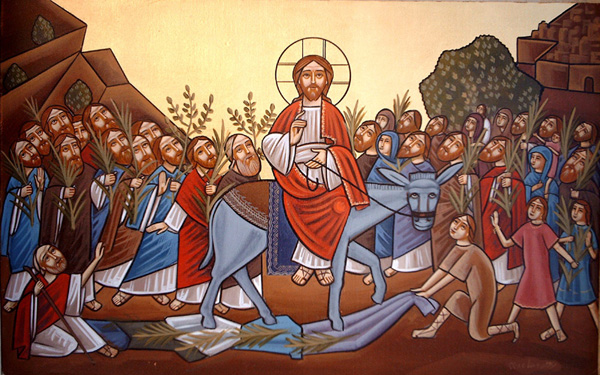
palm-sunday

PSALM 118:1-2, 19-29

1 O give thanks to the LORD, for he is good;
his steadfast love endures for ever!
2 Let Israel say,
“His steadfast love endures for ever.”
19 Open to me the gates of righteousness,
that I may enter through them
and give thanks to the LORD.
20 This is the gate of the LORD;
the righteous shall enter through it.
21 I thank you that you have answered me
and have become my salvation.
22 The stone that the builders rejected
has become the chief cornerstone.
23 This is the LORD’s doing;
it is marvelous in our eyes.
24 This is the day that the LORD has made;
let us rejoice and be glad in it.
25 Save us, we beseech you, O LORD!
O LORD, we beseech you, give us success!
26 Blessed is the one who comes in the name of the LORD.
We bless you from the house of the LORD.
27 The LORD is God,
and he has given us light.
Bind the festal procession with branches,
up to the horns of the altar.
28 You are my God, and I will give thanks to you;
you are my God, I will extol you.
29 O give thanks to the LORD, for he is good,
for his steadfast love endures forever.

READING MARK 11:1-11
1When they were approaching Jerusalem, at Bethphage and Bethany, near the Mount of Olives, he sent two of his disciples 2and said to them, “Go into the village ahead of you, and immediately as you enter it, you will find tied there a colt that has never been ridden; untie it and bring it. 3If anyone says to you, ‘Why are you doing this?’ just say this, ‘The Lord needs it and will send it back here immediately.’” 4They went away and found a colt tied near a door, outside in the street. As they were untying it, 5some of the bystanders said to them, “What are you doing, untying the colt?” 6They told them what Jesus had said; and they allowed them to take it. 7Then they brought the colt to Jesus and threw their cloaks on it; and he sat on it. 8Many people spread their cloaks on the road, and others spread leafy branches that they had cut in the fields. 9Then those who went ahead and those who followed were shouting,
“Hosanna!
Blessed is the one who comes in the name of the Lord!
10 Blessed is the coming kingdom of our ancestor David!
Hosanna in the highest heaven!”
11Then he entered Jerusalem and went into the temple; and when he had looked around at everything, as it was already late, he went out to Bethany with the twelve.

When I was in college there was an album that I swear must have been standard issue for every college dorm room—Frampton Comes Alive. You could hear it playing from five to ten rooms simultaneously, and every time you turned on the radio, you got serenaded by Mr. Frampton, pleading with you to show him the way.

framptoncomesalive In 1977 Rolling Stone called him the Artist of the Decade. And that was pretty the time anyone heard of Peter Frampton. He disappeared just as quickly and just as dramatically as he appeared.
That has happened countless times—from artists to politicians, from TV celebrities to world leaders. Up one minute, and down the next.

And that is what happened to Jesus on Holy Week. He came into Jerusalem to shouts of praise and acclamation. But by Friday the people who were singing his praises were not calling for his execution.

How could things have turned around so dramatically? To understand that you have to understand a little about the political situation at the time. The whole country had been run by a king named Herod at the time of Jesus’ birth, but he was so cruel and so corrupt that when he died most of the people were actually glad to see the country partitioned, and a Roman led government set up in Jerusalem. One of Herod’s relatives, who was also called Herod was set up as the ruler of Galilee. But at the time when Jesus entered Jerusalem, that area was officially ruled by the Romans.

jesus-worldTheir governing of the area was not all that successful. It was not one of the best places to be posted if you were a rising young Roman, and was often ruled by incompetents, the last of which was Pontius Pilate. Pilate had caused a stir when, to show his authority, he put up Roman eagles on the doors of the Temple. That caused a riot which lasted for days, and he had to take them.

Basically Pilate was one of those leaders who folded when he should have stood firm, and stood firm when he should have been flexible. It had been almost thirty years since the corrupt and cruel Herod had ruled, and most people forgot how bad he was. So they were ready for a change.

The other party ruling Jerusalem was the Sanhedrin, The Romans had learned that if they did anything the people pitched a fit. So, like many colonial powers, the appointed some locals to be the local face of authority, and instead of actually controlling the country, they controlled, more or less, the local governing authorities, which was the Sanhedrin, and they let the Sanhedrin rule the country in their place. Most Romans actually lived in the city of Caesarea, which was a coastal resort town, far from Jerusalem.

By the time Jesus makes his Palm Sunday appearance, the people are sick and tired of both the Romans and the Sanhedrin. They had heard of this rabble rousing rabbi, and thought he just might be the one who would get rid of both the Romans and the Sanhedrin. Jesus had deliberately taken the long way into Jerusalem, through Jericho, and taught and preached along the way. He made it known, before the left Galilee, that he WAS heading for Jerusalem, and the something really big was going to happen there, and as he travelled there, the word begun to spread.

So when Jesus is just outside the gates, people knew he was coming, and they had high hopes that he just might the One who could free them from all their troubles. He might be the one who could free them from the Romans, and who could help them get their country back. He could be the one who could reestablish the reign of God back in their country, who could bring back the good ole days when King David ruled the country. He could make them a contender on the world stage, and not just a second rate back water country.

Or, he could at least provide them with some entertainment along the way. If he was not the one, they at least hoped he would put on a good show for them.

So they grabbed their palm branches, which were a “secret” sign of revolt against Rome, and they headed out to meet him as he entered.

****

I can only imagine what Jesus is thinking as he is moving through the crowd on Palm Sunday. He sees the excited crowds, and he knows what they are expecting of him. And he knows he will not fulfill their expectations. Not only that, he knows that by the end of the week, many of the people who are now praising him and who think he is the greatest thing since Roman Numerals will soon be calling for his execution.

So what is he thinking as he enters? What is going through his head as he sees the smiling faces all around him, knowing that some of these same people will be scowling at him in just a few days?

He knows his mission and he knows that it is not what the people want to see. It is easy for them to throw a parade today, but he knows their commitment to him is mile wide, but only an inch deep. Anyone can join a victory parade, especially they had nothing to do with the victory.

But Jesus does not measure his worth by what the crowd thinks of him. His agenda is not set by what will make him popular. He knows that there are things he could do, which would make his stock soar with the crowd, but he also knows that is not what he has set out to do. That would be a detour from his main mission and at this point he cannot afford any side trips.

His job is not to save a country, but to save humanity. He does not want to be a temporal earthly king, subject to all the demands of the political situation. He has bigger fish to fry. He knows political gains are always short term gains, and he has his eye on the eternal. He is not looking to get people’s approval. He is looking to get into their souls. He is not looking to supply them with bread for a day, but with spiritual nurture for life. He is not looking to make a difference in their circumstances. He wants to be the difference in their entire lives.

So the crowds don’t faze him. He is not seduced by them. He does not need their approval. He is not out courting votes, or organizing supporters so he can get his agenda passed.

Jesus knows that you are not defined by who the crowd thinks you are. The crowd may praise you, or the crowd may jeer you, but that says more about that crowd than about you.

Jesus did not come to set up his own version of power politics. He did not come to win more power for him and his. He did not even come to change that game.

He came to set up a whole new game, called the church. Of course, he got crucified for that.

He did not take on the Romans, or the Sanhedrin. He did not go after political power, he did not try to set himself up as the New King of Jerusalem. And the people noticed, and they were disappointed. His own followers began to grow impatient. Instead of attacking the Romans, he went after the religious hypocrites of his day. Instead of going after the dirty sinners and the foreigners, he went after the self-righteous. Instead of going after the political oppressors, he went after things and the people who oppress our souls.

He did not play the game the people expected him to play. I think that was why he was killed. If he had played the game, the people would have supported him, but the religious authorities and the political authorities knew they could eventually end up controlling him. If he played their game, he would have ended up as one of them. And then he might have proved quite useful to the religious and political authorities of his day.

But he did NOT play their game, and I think that is what scared them. They realized he was a man they could never control. He could not be controlled by the crowds; he would never play to them to get their approval, and he could not be controlled by the powerbrokers of his day. He would never try to outdo them by becoming one of them.

He was doing something completely different.

And that scared them.

He could not be coopted. He could not be corrupted. He could not be used. And so in the end he was useless to the crowds, so they called for his crucifixion. He was useless to the powerbrokers, and so they had him crucified.

It is always tempting to play to the crowd, to play to the powerbrokers. It is always tempting to play the game the society around you wants you to play. Over many centuries, at many different times, the Church of Jesus Christ has done that. When it did it often got temporary political power and popularity, but it always lost more than it got.

In this world we do that. And for the most part there is nothing wrong with it. I have played the political game, and it is a fun game. But please, let us NOT do this in the name of Jesus. That demeans his name. That cheapens what he really did on after Palm Sunday, and it brings Jesus down to our level; it does not raise us to the level of Jesus.

We are entering an election year, and we are going to see people running campaigns and advocating worldly political power agendas and some will be claiming to do it for God. And that is just a lie. People who say that are deluding themselves and others (or maybe just others), and there is nothing godly about what they doing.

Any politician who equates an earthly political agenda with the Will of God has cheapened God. They are misrepresenting the Gospel of Jesus Christ. God does not have a political agenda, at least not the ones that either the Left or the Right in America is interesting in pursuing. Let me say this clearly. If anyone claims that God is behind their political agenda, they are lying to themselves and you. Or they are just lying to you.

This is not to say that some politicians are not influenced by God. I have met a few who were devout in their beliefs, and one even told me he made the decision to run for governor of Alaska sitting in a worship service in my old church. But he never told anyone else that, and he certainly did not run as if he were God’s Own Candidate, which is a good thing, because he lost in the primary.

The Church of Jesus Christ is NEVER called to play the game of power politics, and we certainly never are to do it in the Name of Jesus. We are taking His name in vain if we do that. The Church of Jesus Christ is not called to be powerful or popular. We are called to be faithful.

Whenever the church tried to be powerful or popular, it stopped being faithful and then lost both power and popularity. All through history you see times when the church is pursuing power or popularity and it NEVER turns out well. I wish the Evangelical Right would learn this. You see, the trappings of the world are fickle. Crowds may gather to cheer you on, but later those same crowds may turn on you, and cheers turn to jeers. Jesus knew that, which is why he was not tempted or persuaded by the crowds. He knew his mission. He knew what he was about and he did not need the world, he did not need the crowds to validate who he was.

Had he not remained faithful, he would never have been our savior. Had he fallen sway to the seductive influence of the crowds, had he tried to outmaneuver the power brokers of his day, he would have been a mere flash in the pan. But because he remained faithful, faith as Paul says even to death, he become the Lord and ruler of all Creation.

The church’s only power is its ability to remain faithful to what God is calling us to do. The Church’s only popularity contest is to be popular with God, who calls the Church into being.

If we chase earthly power and popularity, we will be no heavenly good. If we put our faith in the crowds or the politicians, we betray the God who formed us.

But if we remain faithful we will be powerful instruments of God, who have something to offer to the masses. They do not sway us. We minister to them.

As the people of God, may we shun the agendas of others, and remain faithful to our calling in Jesus Christ—to love and to serve.

Amen.

Posted in Uncategorized | Leave a comment

Letting Go of Egypt

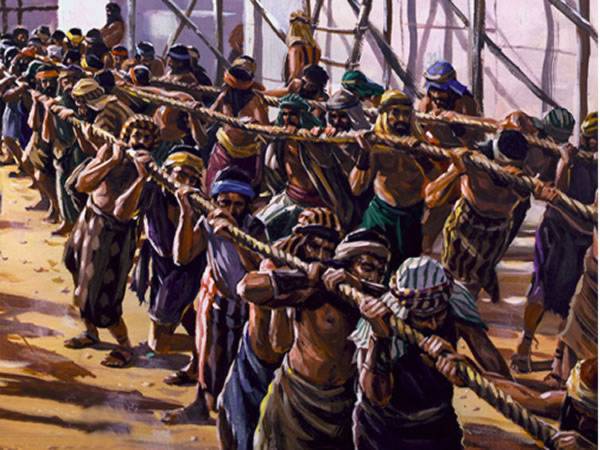
In order to live, sometimes something in us has to die. If we are going to live in the Promised Land, we have to let go the parts of Egypt that still cling to us.

slaves-blblical-times

JEREMIAH 31:31-34
31The days are surely coming, says the LORD, when I will make a new covenant with the house of Israel and the house of Judah. 32It will not be like the covenant that I made with their ancestors when I took them by the hand to bring them out of the land of Egypt — a covenant that they broke, though I was their husband, says the LORD. 33But this is the covenant that I will make with the house of Israel after those days, says the LORD: I will put my law within them, and I will write it on their hearts; and I will be their God, and they shall be my people.34No longer shall they teach one another, or say to each other, “Know the LORD,” for they shall all know me, from the least of them to the greatest, says the LORD; for I will forgive their iniquity, and remember their sin no more.

JOHN 12:20-33
20Now among those who went up to worship at the festival were some Greeks. 21They came to Philip, who was from Bethsaida in Galilee, and said to him, “Sir, we wish to see Jesus.” 22Philip went and told Andrew; then Andrew and Philip went and told Jesus. 23Jesus answered them, “The hour has come for the Son of Man to be glorified. 24Very truly, I tell you, unless a grain of wheat falls into the earth and dies, it remains just a single grain; but if it dies, it bears much fruit. 25Those who love their life lose it, and those who hate their life in this world will keep it for eternal life. 26Whoever serves me must follow me, and where I am, there will my servant be also. Whoever serves me, the Father will honor.
27“Now my soul is troubled. And what should I say — ‘Father, save me from this hour’? No, it is for this reason that I have come to this hour. 28Father, glorify your name.” Then a voice came from heaven, “I have glorified it, and I will glorify it again.” 29The crowd standing there heard it and said that it was thunder. Others said, “An angel has spoken to him.” 30Jesus answered, “This voice has come for your sake, not for mine. 31Now is the judgment of this world; now the ruler of this world will be driven out. 32And I, when I am lifted up from the earth, will draw all people to myself.” 33He said this to indicate the kind of death he was to die.

lawheart

Can you think of something that is a positive live event, but which can also cause you to grieve?

When I was working as a chaplain in the hospital, I used to do groups in the behavioral health ward, one of which was a grief group. I started the group by asking group members to list the life events that can cause grief. They usually came up with the major events: death of a loved one, divorce, getting fired or laid off from a job—things that most people would consider part of life’s tragedies.

But then I would ask them if they could think of any life events which were generally thought to be positive, but which can still cause people to grieve. Can you think of any?

The one that comes immediately to my mind is watching your children grow up. My daughter was really into music. She and I did a radio show together, and I learned more about current music from her than from anyone else in my adult life. After she has left for college I was doing some cleaning around the house, and I found the first CD I ever bought her. It brought back memories of the excited 12-year old girl, who shared all the lyrics with me.
And I missed that 12-year old year. She was gone, never to return again. At the time I found that CD she was a freshman in college, who had done very well in high school, and who looked to have a successful future. She was 19 years old, and a very mature 19 years old. I was extremely glad that my 19-year old daughter was acting like a mature 19-year old. That was a very good thing. If, at 19 she was still acting like a 12-year old, that would be very bad.

Nevertheless, I still missed that 12-year old girl. She was gone. She grew up. She changed. She changed for the better, but she changed. She is no longer who she was. That’s a good thing. But in some ways a sad thing.

We tend to find that change is very hard. We don’t like change.

Today’s lessons are about change.

Jesus knows how hard change is. He says it is like death. He says a time is coming when He will be changed—he will be glorified, and he immediately follows that up by saying, “Very truly, I tell you, unless a grain of wheat falls into the earth and dies, it remains just a single grain; but if it dies, it bears much fruit.”

Some change is like death, Jesus says. Not all change, but sometimes significant change is like death. Something has to die so that something else can live. The 12-year had to do change, had to disappear, had to die, so that the 19-year old could live.

Think about some major changes in your own life. In order to make the change, you have to let go of some things. You had to let them die. When you take a new job, you have to let go of the old job. When you get married, as the Bible says, you have to leave your family behind, and cleave to your spouse. When you have children, there is a lot that you have to leave behind to become a parent. Now perhaps death is too strong a metaphor for most changes, but if nothing else Jesus is saying that major change entails major loss.

When the Israelites left the slavery of Egypt, slavery was all they knew. They were slaves. Their parents were slaves. Their grandparents were slaves. Their great-grandparents were slaves. They knew of the slaves and masters, oppressors and oppressed, but what did they know of freedom? What did they know of love?

So when the things started to get tough out in the desert, what did they do? They longed for Egypt. They longed to be slaves again, because THAT WAS ALL THEY KNEW. Believe or not, slavery was their comfort zone. Yes, it was horrid, but it was the devil they knew. Being out in the wilderness was scary. It was full of unknowns. At least when they were slaves, they knew what to expect.

So, believe or not, they often longed for the days of slavery. That is actually not all that unusual. An alcoholic or drug addict will do the same thing. They know that substance abuse may be killing them, but when life gets hard, many will long to return to the bottle or crack pipe because it is familiar. It is what they know. People who were abused as children often end up in abusive relationships as adults because that is all they know. I once counseled someone who was in an abusive relationship, and who had a background of abuse. I asked her if her current relationship was healthy, and she was surprised at the question. It never occurred to her that a relationship could be healthy!

For Israel, if they were to become the people of God, the Egypt within them must die. That part of them that was still a slave had to die. They could not take that into the Promised Land. They could not take pattern of Master and Slave, Oppressor and Oppressed with them into the promise land. They could recreate Egypt in Canaan. Egypt had to die, so that freedom could truly live.

In the same way as we enter into whatever Promised Land God has for us, Egypt, that part of us that keeps us down, has to die. Jesus said that in order for him to be glorified he had to die. He had to make a SERIOUS change. Now he was talking about his mortal body, but he goes on and he invites us to join him in death.

In order for us to truly come into glory, there are parts of us that have to die. Parts of us have to change. You cannot bring the anxiety of Egypt into the Kingdom of God, for example. In Egypt we fret about making ends meet, about making sure we can pay the bills, we worry about having enough to what we are supposed to do. But in the Kingdom of God, that kind of anxiety is like wearing a tux to a pool party. Or a swimsuit to a formal dinner. We should be wise stewards, yes. But anxious? Never. Do we not believe that God is in control?

Social rank and status have no place in the kingdom of God. That the way of Egypt. We are not defined by who we know or what we make or what we own, or what job we have or had. We are children of God. All of us. From the people who come to get food on Wednesdays to the founders of this church, we are all equal in God’s eyes. From the richest to the poorest, we are all an important part of what God is doing here.

Fear has not place in the Promised Land. In Egypt we are often driven by fear. Did you notice that last September and October the news was full of stories of Ebola, how radical Islam was taking over all the Middle East, and how the economy was falling apart? I’m a news junkie, but I tell you it was so depressing I stopped listening to the news. After the election in November we went back to hearing about George Clooney’s wedding and looking at cute cat pictures on the internet.

The slave masters of Egypt know that if they can make us afraid, they can control us. How often we react to political situations based on what we are afraid of, not what we actually want to see happen? I guess that is why it does not bother us that Congress is deadlocked. We are so afraid of what they might do that is bad, we would rather they not do anything at all.

In talking with other pastors about the current State of the Church, I hear a lot about what we should fear. The Church is shrinking, it is growing older, it is becoming more and irrelevant to people’s lives. Fewer and fewer people attending church, especially young people. There is more bad publicity about Christians than good PR. If I was looking to be afraid, there is a lot to be afraid of, but that is the way of Egypt. Fear has to die if we are truly going to enjoy the Promised Land.

So if we are willing to leave Egypt, then what are we heading toward? What is the Promised Land for us today?

Now let’s look at the Old Testament lesson.

In the Jeremiah lesson, God says,

31The days are surely coming, says the LORD, when I will make a new covenant with the house of Israel and the house of Judah.

Now at this point there must be a lot of people asking, “What was wrong with the old covenant? It was a perfectly good covenant. We don’t need a new one. I just got used to the old one.”

But God goes on.

32It will not be like the covenant that I made with their ancestors when I took them by the hand to bring them out of the land of Egypt — a covenant that they broke, though I was their husband, says the LORD.

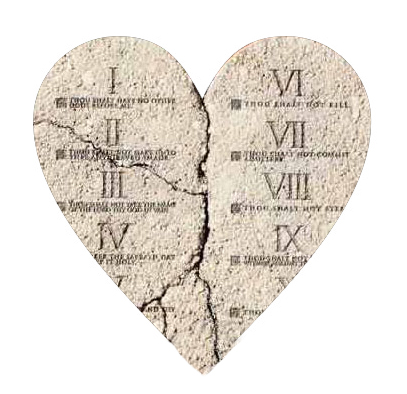
Remember when I did the sermon on the Ten Commandments a few weeks ago? I made the case they were more like wedding vows than legal code, and here we find God saying the commandments were a sign that he was the husband of the people of God. But he seems to be changing the wedding vows.

33But this is the covenant that I will make with the house of Israel after those days, says the LORD: I will put my law within them, and I will write it on their hearts; and I will be their God, and they shall be my people.34No longer shall they teach one another, or say to each other, “Know the LORD,” for they shall all know me, from the least of them to the greatest, says the LORD; for I will forgive their iniquity, and remember their sin no more.

When I marry someone, there are usually two sets of vows in the service. The first are the traditional vows; Do you, [fill in the blank] take [fill in the blank] to be your lawfully wedded wife,
to have and to hold from this day forward,
for better, for worse;
for richer, for poorer;
in sickness and in health;
to love and to cherish,
so long as we both shall live?

Those are the traditional vows, and I don’t give the bride or groom a choice in those. That is the old covenant.

But I also ask them to write their own vows, promises that they make one another, which come from their own heart. I have yet to have anyone object to the traditional vows, but plenty ask me, “Do we really have to write our own vows?

In essence they were saying, “I don’t mind you giving us vows that we need to keep, but we would rather not make up our own vows.” Now to my way of thinking, those are the most important vows. It is one thing to say to the person that you love, “I agree with what that person says our marriage should be like. But I am not sure I can articulate within my own heart what I think our marriage should look like.”

Is that much different for some people when it comes to their relationship with God? They don’t mind being told what their relationship with God should look like. They like the comfortable black and white world view where they don’t have to figure anything out on their own. They just read a book, listen to some sermons, and they know all they need to know about God. All the answers are found in the Holy Book and the teachings of the clergy.

Some people want all the answers in a clear, concise, and non-confusing manner. They don’t want complexity or shades of meaning. They don’t want gray areas. They don’t want any uncertainty.

But that is not what God promises. That is Egypt, and in Egypt God is little more than just another slave master—perhaps a kinder, gentler master, but still a slave master. We are not children of God in Egypt, we are not friends, we are slaves.

But love is not about keeping the rules. It is a relationship. And relationships are harder than rules. I don’t have to have a relationship with the police officer who is giving me a speeding ticket, or with the IRS man who is saying I owe taxes. I just do what they say.

I have a relationship with God. In John 15:15 Jesus says, “No longer do I call you servants, for the servant does not know what his master is doing; but I have called you friends.” A relationship based on love is a totally different thing from a relationship where one is a slave and the other is a master.

God gave the people wedding vows in the Ten Commandments, but in Jeremiah we hear that God will put the law in hearts. Those are the vows we write together. That is where we acknowledge that God lives in us, and our lives are held in God’s hands.

We are never liberated into total freedom. Freedom always comes with responsibility. I have responsibilities within my marriage. The vows that I ask couples to write are still vows. But they come from the heart, not from an outside authority. They come from the essence of the relationship, not from obligations of slavery.

I once heard a speaker tell about getting on a bus, and a blind man got on the same bus at the next stop. He could tell he was blind because he had a Seeing Eye dog. The dog led the man to an empty seat, nudged him toward it, and when the man was seated, got himself comfortable under the seat. The dog apparently knew which stop they were getting off at, because he got up even before the man did, nosed his way out into the aisle, and made it possible for the man to get up without bumping into other people. He led the man off the bus and down the street.

The person who told this story said he was so impressed by this, that he following the man off the bus and said to him, “That is an incredibly well trained dog you have.”

The blind man said, “This not a trained dog.”

“Not a trained dog? But I saw him lead you onto the bus, into a empty seat, and get you off the bus at your stop. How can you see he is not a trained dog?”

“He’s not a trained dog. He is an educated dog.”

“Well then, what’s the difference between a trained dog and an educated dog?”

“A trained dog, you say ‘go,’ he goes. You say ‘stop,’ he stops. And educated dog, you say ‘go’ and if it is not safe to go, he won’t go. You say ‘stop’ and if it is not safe to stop, he won’t stop. An educated dog does not just follow orders. He does what is best for you.”

God does not want us to be trained dogs. God wants us to be educated. God wants us to follow the law written in our hearts, not just some abstract legal/religious moral code. God wants us to love, in the way God has equipped us to love.

The law in your heart will be exactly what is written in your neighbor’s heart. That is why Jeremiah says, “No longer shall they teach one another….” A person cannot just teach another person what to do anymore, because it is no longer just about following the whims and will of a slave master. It is about a relationship.

Now I have to honest, that means change and for some people that kind of change is death. They want Egypt, they want rules and regulations, they want to be told what to do. But that is the way of Egypt. And we live, we are invited to live in the Promised Land, where the relationships are not master/slave, but Child and Father. We live in the land of love, not the land of law. We live the New Covenant of God.

Posted in Uncategorized | 1 Comment

A Plea for Unity

A while ago I was asked to prepare a paper for a church was that considering leaving the PC(USA) over the issue of same sex marriage (among other things). This is what I wrote to them. In light of the fact the denomination recently officially allows same sex weddings, I thought I might post this for your consideration.

Gay Marriage Becomes Legal In California
I have a serious concern to bring up with you, my friends, using the authority of Jesus, our Master. I’ll put it as urgently as I can: You must get along with each other. You must learn to be considerate of one another, cultivating a life in common. I bring this up because some from Chloe’s family brought a most disturbing report to my attention—that you’re fighting among yourselves!

You realize, don’t you, that you are the temple of God, and God himself is present in you? No one will get by with vandalizing God’s temple, you can be sure of that. God’s temple is sacred—and you, remember, are the temple.
I Corinthians 1:10-11, 3:16-17

In the play Luther, one of the characters says, “You know, a time will come when a man will no longer be able to say, “I speak Latin and am a Christian” and go his way in peace. There will come frontiers, frontiers of all kinds between men and there’ll be no end to them.”

There are borders all over Christendom, and even within denominations. The Presbyterian Church is no exception to this. Many good churches are leaving the denomination and creating new borders. In doing so, they need to understand that they are diminishing the overall effectiveness of the church.

The Christian church in America is shrinking by alarming rates. Even denominations that have formerly been growing, such as the Southern Baptists, are now losing members.

The largest enemy of the church today is not atheism or any rival organization; our biggest enemy is apathy. People do not care about the Church anymore, especially young people. They believe that church has little or no relevance to their lives. They see what the church is against, not what we are stand for. In a recent survey, people 16-29 were asked what their dominant perception of Christianity was. Ninety-one percent of non-Christians and 80 percent of Christians in this group said that the word that best describes today’s church is “homophobic.”

Add to that the fact that the mainline churches are fracturing themselves through church splits and church schisms, is it any wonder that they have little or no interest in becoming active in a church?

At the signing of the declaration of Independence, Benjamin Franklin said, “We must all hang together, or assuredly we shall all hang separately.” He understood that if the fledgling country split into factions, it could not survive.

That is true of the Church today. As the overall number of Christians decreases, the PCUSA is shooting itself in the foot with the internal fights we are having. We are splitting a declining denomination into smaller and smaller pieces.

We know these are troubling times, and sometimes it feels like we are bending too far to accept people whose beliefs are very different from our own. We are watching the definition of marriage change in our country. We are watching as the role of gays and lesbians in the United States is changing. And we are seeing those changes played out in the sanctuaries of our own churches. Change is always hard. It is hard for the people who want the change, and hard for the people who do not.

Let it be known that this Presbytery does not want your congregation to leave. We believe we are one church in Christ, one Body of Christ. We may be different, and we may believe and practice our faith a little differently one church to the next. “Just as a body, though one, has many parts, but all its many parts form one body, so it is with Christ. For we were all baptized by one Spirit so as to form one body—whether Jews or Gentiles, slave or free—and we were all given the one Spirit to drink. Even so the body is not made up of one part but of many.” (I Corinthians 12:12)

When congregations leave denominations, they are hurting the overall body of Christ, and our Christian witness to the world. They are proving our disunity to the world, giving the world a reason to say that, in spite of all our good words, we are no different from any other secular organization.

The plea for unity is a plea for us to live with our differences. We are not writing this to change what you believe, but to ask you to accept those within our denomination whose beliefs differ from yours, and live peaceably together as the One Body of Christ.

1. Based on Scripture, how does our denomination argue for the ordination of homosexuals and redefinition of marriage?

The church is not necessarily arguing FOR the ordination of gay and lesbian people. It is saying that being gay or lesbian may not automatically disqualify someone from ordination.
Based on Scripture, our denomination cannot argue for the ordination of anyone, nor for the marriage of anyone. (There is nothing like Presbyterian ordination explicitly mentioned in scripture, and taking Paul on marriage, he tells us that marriage is NOT the most desirable state, and only allows it because we are not generally strong enough to remain unmarried.)

So let’s rework the question: How can a person who takes the Bible seriously as the inspired, infallible Word of God come to the conclusion that the Bible does not condemn, in every instance, any and all homosexual behavior. How can the church accept the marriage of two people who are of the same gender?
First, it is not a major topic in the Old or New Testaments. Jesus is completely silent on the issue.
It is found in two places in the Old Testament; indirectly in Genesis in the story of Sodom, and in the book of Leviticus.

In the story of Sodom the men in wanted to rape the angels, and rape of any kind is never justified. What is being referred to there is the kind of sexual behavior that would be condemned between any two people, not just homosexuals. Also, Ezekiel tells us why Sodom was destroyed: Ezekiel 16:49-50 “This was the guilt of your sister Sodom: she and her daughters had pride, excess of food, and prosperous ease, but did not aid the poor and needy. They were haughty, and did abominable things before me; therefore I removed them when I saw it.”

Leviticus is where we see the issue come up directly. It says clearly, “Thou shalt not lie with mankind, as with womankind: it is abomination.” (Leviticus 18:22) and “If a man also lie with mankind, as he lieth with a woman, both of them have committed an abomination: they shall surely be put to death; their blood shall be upon them.” (Leviticus 20:13)

In the New Testament, as stated before, Jesus is silent, but Paul mentions same sex relationships in his letters. In the book of Romans he writes that humans “exchanged the glory of the immortal God for images” (1:23) and because of that, “God gave them over in the sinful desires of their hearts to sexual impurity” (1:24) and then, “their women exchanged natural sexual relations for unnatural ones. In the same way the men also abandoned natural relations with women and were inflamed with lust for one another.” (1:26, 27)
He also says, in 1 Corinthians 6:9-11: “Or do you not know that wrongdoers will not inherit the kingdom of God? Do not be deceived: Neither the sexually immoral nor idolaters nor adulterers nor men who have sex with men nor thieves nor the greedy nor drunkards nor slanderers nor swindlers will inherit the kingdom of God. And that is what some of you were. But you were washed, you were sanctified, you were justified in the name of the Lord Jesus Christ and by the Spirit of our God.”

Given these verses, how on earth can the Presbyterian Church possibly accept ordaining or marrying gays and lesbians?

Let’s start with the Leviticus verses.

We have two choices here. We can accept these verses as eternally valid condemnations of same sex behavior, because we accept all that the Old Testament has to say about sexuality as eternally valid. The Bible says it; it therefore must be believed and followed.
Many people chose this option.

HOWEVER…
If people chose to take the Old Testament commands and law at face value, and believe that ALL of God’s word is valid for today, there are a few other things they need to consider.

The Old Testament also forbids:
1) Usury (More on this later.)
2) Mixed planting (Leviticus 19:19, “‘Do not plant your field with two kinds of seed.”)
3) Women wearing pants or other male garments (Deuteronomy 22:5, “A woman must not wear men’s clothing, nor a man wear women’s clothing, for the Lord your God detests anyone who does this.”)
4) Rare meat (Leviticus 19:19, “‘Do not eat any meat with the blood still in it.”)
5) Tattoos (Leviticus 19:28, “‘Do not cut your bodies for the dead or put tattoo marks on yourselves.”)
6) Wearing material made of two different types of fabric such as polyester, (Leviticus 19:19, “‘Do not wear clothing woven of two kinds of material.”)
7) A host of foods, including shrimp, lobster, pork, and escargot (Leviticus 11)
8) Wearing pearls, gold or fancy hair styles. (Actually this is a new Testament prohibition, I Timothy 2:9, “I also want the women to dress modestly, with decency and propriety, adorning themselves, not with elaborate hairstyles or gold or pearls or expensive clothes.”)
9) Gossip (Leviticus 19:16 “‘Do not go about spreading slander among your people”.)
10) Treating illegal aliens different from the way you treat your own citizens. (Leviticus 19:33,34, “‘When a foreigner resides among you in your land, do not mistreat them. The foreigner residing among you must be treated as your native-born. Love them as yourself, for you were foreigners in Egypt.”)

In other words, it is fair to say that over the years we have decided to pick and choose which Old Testament commandments we will keep and which ones we can say are not relevant to faith and practice today.

Why then, given how we can disregard parts of the Bible as not relevant, would we insist that the Bible clearly teaches that two people of the same gender who are in a loving, monogamous relationship are outside of God’s will? If we can marry a woman who has tattoos and is wearing a pearl necklace, and the husband is a banker in a Presbyterian church, and then serve shrimp and pork at the church reception, why would we not marry two men or two women who are willing to commit their lives in love to one another?

There are other people who believe that this is a major inconsistency in the Presbyterian Church.
After careful study some have come to the conclusion that we cannot just take the verses concerning homosexuality in the Bible and apply them broadly to the church today.

How did they come to this conclusion?

First, some people see a big difference with the sexual ethics of the Old Testament, and those of the New. For example, polygamy is an accept practice in the Old Testament. But no Presbyterian today says, “Polygamy was good enough for Jacob; it is good enough for me!” In the Old Testament, Tamar seduces her father-in-law in order to bear his children on behalf of her deceased husband, and is exalted as a righteous woman for that! How many Presbyterians would say that a woman in similar situations should seduce her father-in-law?
In the passages on sexuality in Leviticus, many sexual relationships are forbidden. But these passages do not forbid sex between a father and his daughter. In fact, it describes how a father can give his daughter to another man as a slave, and what happens, if the daughter does not please her master. (Exodus 21:7-11) The daughter is more a piece of property than a human being in these cases.

“Is it possible,” some people ask, “that these few verses in Leviticus do not reflect the entirety of sexuality and sexual ethics? Without saying that were wrong at that time and that place, is it possible that they do not apply today, just as the story of Tamar is not a good example for how a widow is supposed to deal with her in-laws in today’s world?”

As pointed out before, we have done that with other, more explicit areas of Old Testament ethics. For example the Old Testament clearly forbids usury, (loaning money at interest).

• Exodus 22:25— “If you lend money to one of my people among you who is needy, do not treat it like a business deal; charge no interest.”
• Leviticus 25:35-37— “‘If any of your fellow Israelites become poor and are unable to support themselves among you, help them as you would a foreigner and stranger, so they can continue to live among you. Do not take interest or any profit from them, but fear your God, so that they may continue to live among you. You must not lend them money at interest or sell them food at a profit.”
• Deuteronomy 23:19-20 “Do not charge a fellow Israelite interest, whether on money or food or anything else that may earn interest. 20 You may charge a foreigner interest, but not a fellow Israelite, so that the Lord your God may bless you in everything you put your hand to in the land you are entering to possess.”
• Ezekiel 18:17— “He withholds his hand from mistreating the poor and takes no interest or profit from them. He keeps my laws and follows my decrees. He will not die for his father’s sin; he will surely live.”
• Psalm 15:5—“ Who lends money to the poor without interest; who does not accept a bribe against the innocent. Whoever does these things will never be shaken.”

The Old Testament clearly has more to say about usury than it does homosexuality. Why do we not take these verses as God’s law for us today? How many of us believe we should leave the Presbyterian Church because it ordains bankers? (For the record, I used to work for a bank.)

In short, some say, standards have changed between the Old and New Testaments, and if we can accept bankers, then maybe we can accept gays and lesbians who have monogamous, loving relationships.

When we say standards have changed, we need to be very careful however. This NOT to say that “anything goes.” Not at all! There is a trajectory of behavior, which we should follow.

In the Old Testament, women were treated more like property than human beings, eunuchs were not allowed in the assembly, and circumcism was an absolute requirement to be a follower of God. The early church had a wider acceptance of women. One of the earliest new converts was an Ethiopian eunuch, and uncircumcised gentiles were accepted. In other words, the Church has moved toward wider and wider acceptance of people. Is it possible that today that same trajectory moves us today to accept gay and lesbian members?

But what about the New Testament verses? It is one thing to say that perhaps the Old Testament is not as relevant to us today, but what about the New Testament?

Let’s look deeper at those verses.
In the Romans passage Paul is not saying that homosexuality is condemned. He is saying it exists because people have turned away from God. The whole of creation is fallen because of this, and one piece of evidence we have is that men want to have sex with men, and women with women. (By the way, this is the ONLY time that lesbianism is mentioned.) In a perfect world, men would love women, and women would love men, and they would not be sexually or romantically attracted to their own gender.
Of course, in a perfect world, there would be no denominations, no church fights, no examples of Christians killing other Christians, and Christians would love their enemies, choosing to give their lives rather than retaliate against an enemy.

But we all know the world is fallen.

So the question is, how do learn to live in a fallen world, one where there is war, where there are denominations, church fights, and churches who leave denominations? There are even churches who sue other Christians about property issues.

And there are men who fall in love with men, and woman who fall in love with woman. We have made accommodations for other aspects of our fallen world. Why not this aspect?
Well, then, what about the Corinthians passage, where Paul is condemning homosexuality?
Paul uses two words which are described as “men having sex with men,” μαλακοὶ (malakoi) and ἀρσενοκοῖται (arsenokoitai).

The first word literally means “soft,” and is generally used in reference to garments. Nowhere else in the New Testament is it used to refer to humans. Malakoi could just refer to effeminate or “soft” men, who cannot stand up for themselves. Most likely though it refers to male prostitutes. In the first century male prostitutes were always the recipients (or passive partner) of sexual activity from their clients. (In that time frame, it was acceptable to the male who did that penetration, but the passive (or soft) partner was usually a slave, or someone of a lower social status.)

If that is the case, then there is no problem with this, since the Church will not condone prostitution.
Or (It is often translated as effeminate.)

Arsenokoitai is the other word Paul uses. It is a rare word in the New Testament, appearing only here and in Timothy, but nowhere else. It is generally taken to mean sodomite, and could refer to any sexual activity outside of genital to genital to coitus, by any two people, same gender or not. If this is true this passage refers to people of all genders who engage in sodomy.

Arsenokoitai literally combines the Greek words for “men” and “bed,” which is why it has been translated to refer to homosexual activity. But when people say that politics makes strange bedfellows, they are not referring to sexual behavior of the politicians in question!

However when the word is used outside of the New Testament it refers to people who take advantage of other people, like slave traders. In other, non-biblical references, it refers to men who are in cahoots to do evil to other people.

This is to say that the possibility exists that this particular verse is not about homosexuality at all, at least not the kind of homosexuality where two people have a caring, monogamous relationship.
In the end, these may or may not be convincing arguments, and many people will continue to read these passages as condemning all homosexual behavior. We are not trying to convince you to accept these arguments for accepting gays and lesbians, but to understand why people some do. When people say we should accept gays and lesbians, it is not like they are just throwing the Bible and theology out the window. There is a legitimate way of understanding the Bible that does not require the Church to reject all gays and lesbians simply because of their sexuality. It may not be what you believe, but we are not requiring everybody to believe the same thing. We do ask that we accept those with whom we disagree on this issue.

When Presbyterians look at these passages, there can be room for different ways to understand homosexuality and the Bible. The Presbyterian Church does not require you to either accept or condemn homosexuality. There is room for people on both sides of the argument, if we allow people to have different views of this issue.
This means that people who believe that gays and lesbians should be fully included in the church must also accept and embrace people who believe differently. And people who believe that homosexuality is sinful behavior can accept that not everyone feels that way, and those who disagree with their position are still Christians, and still their brothers and sisters in Christ.

Churches that do not accept homosexual behavior are not required to ordain people they believe do not qualify. But they should be able to accept churches which do accept gays and lesbians as partners in Christ.

2.If churches start to allow same sex marriages, will they be forced to perform them, even if they do not think the two people should get married?

No pastor is under any obligation to marry ANYONE. There are a variety of reasons why a pastor could refuse to perform a wedding, and many pastors will continue to refuse to perform same-sex weddings, even if the denomination approves them and their state allows it. While the Presbyterian Church is certainly capable of surprising people, almost no one can imagine a scenario where a pastor would be obligated to perform any specific marriage.

Could this occur on the issue of the ordination of gays and lesbians? This is more of a possibility, however given the controversial nature of this specific issue, it is hard to imagine a scenario where churches are forced to accept the ordination of gay and lesbian people in their congregation, or a Presbytery forced to accept the ordination of gay and lesbian teaching elders.

Let’s have a little reality check here. When someone is ordained, they have been in a congregation for a long time. They are known by the congregation. The congregation votes to ordain them. Many, if not most congregations do not have openly gay members. When the church was discussing the ordination of women, there were women in every single Presbyterian Church. What was at stake was the potential ordination of at least half of all Presbyterians.

While we do not know how many openly gay people there are in our churches, it is certainly not half or more! Presbyterian Churches will not be forced to ordain any person who their congregation does not believe is qualified to be ordained.

The worst that can happen is that churches who do not believe it is right to ordain or marry gays and lesbians will be in the same presbytery with churches who do ordain them.

3.Why does the Presbyterian Church get involved with so many social issues?

One of the Great Ends of the Church is, “The promotion of social righteousness,” and this is clearly the most controversial one. One the one hand the church can simply ignore the world around it, and not say anything, or the Church can issue harmless platitudes, encourage people to be good. Either of these would be the safer route.

However the church has taken the risky and controversial stance of believing that the Gospel is not just for people in the pews, and is not just a private thing between a person and their god. The Presbyterian Church has always believed that social righteousness is an important part of the Good News. Evangelism is more than just telling people about God; it is also about showing people how God wants us to live.

That said, this is a messy business. Church and politics has always been a messy business, and here, more than perhaps any other area in our existence, we find the ability to go off track. Personal political agendas, from both the conservative and liberal side of things tends to get in the way of how we define what the Good News means in terms of social righteousness. We are human, and as such are subject to all the errors of humanity. (John Calvin called that “total depravity.”)

So to say that mistakes have been made (by Presbyterians and all other denominations) is a huge understatement. But then, what area of faith and practice is free from human error?

The answer is not to avoid all political issues altogether. Our Barmen Declaration shows us how important it is for the Church to engage with society. Where the Church struggles is an area for grace and forgiveness, for new learning, for more input, and for learning how to do better. But to ignore one aspect of the Church’s call because it might cause controversy is to ignore the call of God.

5. What about…

In Summary
Everyone has different fears and concerns about this, but these are among the greatest; that the Church is marginalized and becomes irrelevant to the world; that we lose young people and never gain them back; that we have more and more smaller churches that can no longer afford a pastor; that we are not able to plant new churches, and that we are not making new disciples of Jesus Christ; that our mission, here and abroad, becomes so limited it is no longer effective; that
All of this is saying in different ways we are afraid that the decline and marginalization of the Church sends a signal to the world that the Gospel of Jesus Christ is not important, and not applicable to their lives.

To be truly inclusive, the church MUST include a variety of points of view. Granted, it is hard to the minority representative of a viewpoint in the room. (Ask some of the early African American or women pioneers in the Church about their experiences.)

The Church is richer when there is more than one voice at the table. This goes to the heart of what it means to be a Presbyterian. John Calvin, and our other founders feared putting too much authority in the hands of a few. No one person has the market cornered on what constitutes correct faith and practice, and Calvin would say anyone who does is bordering on idolatry. That is why we do almost EVERYTHING in the PC(USA) by committee!

Unfortunately this discussion about gays and lesbians has turned into an argument before it even became a decent discussion. Both sides are at fault here. Too many people are talking and not enough people are listening. It is important for the health of our denomination that we hear each other out.
Both sides of this discussion have valid points, and both sides have some things they can learn from the other side. It is easy to say this though. We need to practice it.

We hope you can see from our response to these questions that we take your concerns seriously, and we take you seriously. It is important for us to listen. Later in this process each member of your congregation will be given an opportunity to submit questions, and all of them will be answered to the best of our abilities.

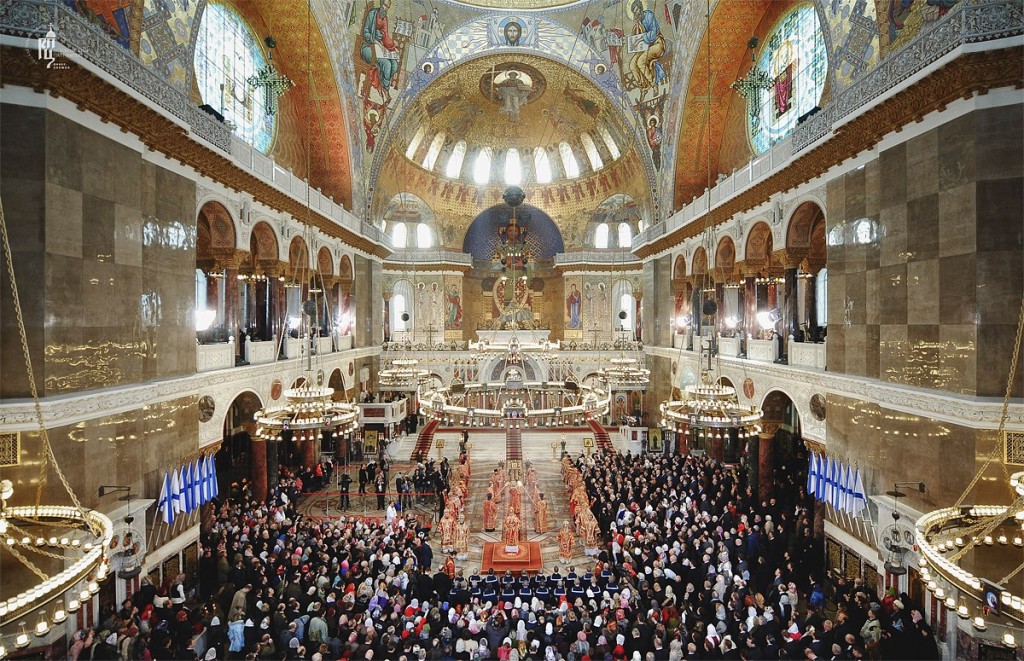
Posted in Christianity and Homosexuality, LGBT, Love, Marriage, Presbyterian, religion and politics, same sex marriage | Tagged , , , , , , | Leave a comment

The Grace of Serpents

download
NUMBERS 21:4-9
4From Mount Hor they set out by the way to the Red Sea, to go around the land of Edom; but the people became impatient on the way. 5The people spoke against God and against Moses, “Why have you brought us up out of Egypt to die in the wilderness? For there is no food and no water, and we detest this miserable food.”6Then the LORD sent poisonous serpents among the people, and they bit the people, so that many Israelites died. 7The people came to Moses and said, “We have sinned by speaking against the LORD and against you; pray to the LORD to take away the serpents from us.” So Moses prayed for the people. 8And the LORD said to Moses, “Make a poisonous serpent, and set it on a pole; and everyone who is bitten shall look at it and live.” 9So Moses made a serpent of bronze, and put it upon a pole; and whenever a serpent bit someone, that person would look at the serpent of bronze and live.

JOHN 3:14-21
14“And just as Moses lifted up the serpent in the wilderness, so must the Son of Man be lifted up, 15that whoever believes in him may have eternal life.
16“For God so loved the world that he gave his only Son, so that everyone who believes in him may not perish but may have eternal life.
17“Indeed, God did not send the Son into the world to condemn the world, but in order that the world might be saved through him. 18Those who believe in him are not condemned; but those who do not believe are condemned already, because they have not believed in the name of the only Son of God. 19And this is the judgment, that the light has come into the world, and people loved darkness rather than light because their deeds were evil. 20For all who do evil hate the light and do not come to the light, so that their deeds may not be exposed. 21But those who do what is true come to the light, so that it may be clearly seen that their deeds have been done in God.”

When I was a pastor in North Carolina I worked with my Presbytery on a committee that helped churches turn around membership declines. Our committee would come in, get to know the church, and try to help them brainstorm ideas about how to turn their decline around
Some churches had a lot of hope, and with some work, could turn themselves around. Others…well God can do the impossible, so I never wrote them off, but…
The first church we visited was the second kind. It was an old, established rural church that was essentially run by three major families, and they were pretty much down to the three major families.
.
Before our meeting with the church I asked a friend to do some reconnaissance and visit the congregation, undercover. None of the church members knew we had asked him to visit.
He reported it was the most unpleasant church experience in his life. The first thing that happened to him was that he was overwhelmed with attention. “A VISITOR!” People were all over him before he could get to his seat. But it was not the kind of attention might get when people care about you. It was the kind of attention you might get from someone who was ready to consume you. He said he felt like Hansel and Gretel in the witch’s kitchen.
Then it turned ugly. One of the members was talking to him, when another member came up and realized that the first member was being a bit too pushy, and right there, in front of God and everyone, attacked that person for being too pushy. Then someone went after the person who had attacked the first member for attacking them. He thought a fistfight might break out before the service even started. Needless to say my friend was in no way interested in staying for coffee after the service, and took off during the last hymn.
When we met with the church later that week, the whole meeting was about the visitor, and how badly all the other people had treated them. As soon as we started our meeting, I starting feeling really anxious. This was a church that was affected with anxiety, and it was contagious. No one took responsibility for their actions; they just wanted to talk about how everyone else had driven the visitor away.
Later I realized what was going on with that congregation. They were so driven by their anxiety and fear that they could not act like decent church members. Attacking others had become the norm there, because no one could face up to the problems they had with any sense of reality.
During that meeting I was reminded of the story of the serpents in Numbers, because I felt like I had stumbled into a den of serpents!
In the Old Testament Lesson, we find the people out in the desert, and they have been there for so long, they have forgotten why they were there. They have forgotten how bad it was in Egypt. As a matter of fact when they think about Egypt, all they can remember are the good times. “Boy back in Egypt everything was great! But now we are stuck out in this desert. Nothing to eat but manna. I am sure getting tired of manna. Manna burgers! Manna pizza! Manana bread! I wish we were back there where we had real food and shelter. Why did you bring us out here to die?”
They grumbled. They murmured. They moaned and complained, and bellyached. Well usually when a group of people bellyache, the results are not good, but in this case they were disastrous.

In other words, when you have a group of people, and all they can do is moan and complain, it is as if a horde of serpents have attacked. Now I am not going to dwell on this part of the story, because, well, this is not our story here at First Church. We don’t have a lot of bellyachers in this congregation, and that is a blessing.
But that is not to say that there are not serpents out there. Maybe our serpents didn’t come from bellyaching, but there are serpents. It’s not all sugar and spice out there. And sometimes the serpents around us can make us act in ways that are not healthy.
What are the serpents in our lives?
We can start with the obvious. Death is the biggie. To think there will be a time when we are not is an unpleasant thought at best. It can be a great fear.
But there are other serpents out there. Loss of control. You know why it bothers you that you have to get a ten year old to show you how to use your phone? Because it shows we have lost some control over our world. As we get older, we find there are less things we can do and feel like we are losing control of our lives.
Driving, physical activities, and probably many of us fear that day when we will end up in a hospital bed, being taken care of by others.
Change can be a major serpent. The world is changing. Last Saturday Angelee and I went to Best Buy to look at some stuff. I headed over to the CDs, and I have to tell you, it was a depressing experience. For most of my life, one of my favorite things was going to a record store, and flipping through the albums. That was back when albums had real album covers! I would look for new releases by bands I liked, or maybe I would find an older LP they did. Or I would find something totally new.
Well albums gave way to CDs, and I made that change ok, but now everybody buys their music online. I thought I might flip through the CDs at Best Buy but they hardly had any at all. I realized my world had changed, and one of my favorite activities for most of my life had disappeared.
The world is changing. Some people are dealing with it fairly well, while others are having a very hard time with it. The more things do change, the more some people will fight to keep the same. But that is a losing battle.
Another serpent is Intimacy—we fear that people will get to know the real us, and that they won’t like what they see. We fear people will get so know things about us that we don’t want anyone else to know, so we hide a great deal of ourselves from others. Or worse yet, we hide those parts from ourselves. We don’t even admit to ourselves who we really are, what our flaws are.
There are plenty of other serpents out there. Poverty. Loneliness. Illness. Losing someone or something we love. For some people retirement is a serpent. Children leaving the nest is a serpent for some people. Some people fear whatever the other political party is. Others fear different religions. Or anything different for that matter.
Oh there are all kinds of snakes out there. The children of God, in the desert, were up to their eyeballs in snakes. So are we, but they are serpents of a different sort.
So what is the solution? We have the disease. What is the cure?
Now, here is where the story gets really interesting. The cure for serpents was….looking at a serpent. They were told to put a bronze serpent on a pole, and if they looked up to that, they would not succumb to the venomous bites.
In other words, the thing they feared the most was exactly the thing they needed to gaze upon. That may not make sense, but think about it—the things you feel the most are the very things that will end up controlling your life if you are not careful.
Your fears will control your life, often in ways you are not even aware of. Someone, for instance, who is afraid of being alone may be so anxious when they finally get into a relationship that they end up sabotaging it. And they end up alone. Or they get want a relationship in the worst kind of way, and so they end up in the worst kind of relationship.
The church I referred to was so afraid of dying that they were almost guaranteeing their own death.
The more you fear something, the more power you give it over yourself.
If you really fear death, you may be so busy avoiding death that you never get a chance to live. If you fear change, you may become so entrenched in what was that you can never enjoy what is. We might cling so hard to our sense of control that we lose sight of the things that are in our control. We are so afraid of others getting to know the worst things about us that we never let them see the best things about us.
And the way we keep from letting our fears control us is to look them in the eyes. We put that serpent up on a pole, and we stare at it until we realize the real thing has no power over us.
If it is true that our fears can be the thing that control our lives, in the same way the very things we fear can be what saves us. The thing that threatens to undo us is in fact the very thing that brings us real and true life.
Whatever we fear can become our agenda for growth. Our serpents can be our salvation. We just need to bring them into the light of day. That is where the Gospel lesson comes in.
Most of us are familiar with John 3:16:
16“For God so loved the world that he gave his only Son, so that everyone who believes in him may not perish but may have eternal life.
But what about the verses that come just before it?
14“And just as Moses lifted up the serpent in the wilderness, so must the Son of Man be lifted up, 15that whoever believes in him may have eternal life.
The serpent in the desert becomes the sign of our salvation.
Then Jesus goes on to talk about the difference between light and darkness.
19-21 “This is the crisis we’re in: God-light streamed into the world, but men and women everywhere ran for the darkness. They went for the darkness because they were not really interested in pleasing God.”
The darkness can hide all manner of evil, but it also magnifies it, and changes good into evil.
When I was in fourth grade I took a paper route. I had to deliver 125 morning papers and around 100 afternoon papers. The morning papers had be delivered by 6:30 on weekdays, 7:00 on weekends. That meant I had to get up and start by 4:30. In. The. Morning.
The first morning was pretty scary. As I was riding my bike in the darkness around the neighborhood I saw what looked like all manner of scary things. Here was a huge dog, lying in wait for me. There was some kind of creature I had never seen before. Was that a person following me? And what was that thing in the shadows around the house that lay all by itself at the very end of a deserted road?
But in the afternoon it had all changed in the light of day. The huge dog was just a bush. The strange creature was a dogwood tree. The person following me was my shadow in the streetlight. The thing in the shadows was a tractor. In the light of day it all looked so different.
If we are willing to let what we fear come into the light, we can overcome our fears. Whatever we fear becomes our agenda for growth.
It is natural to keep what we fear in the shadows. If our bank account may be overdrawn, we don’t want to look at the bank statement. If we are having problems in our relationships, we don’t keep looking at pictures of the person with whom we are fighting. If our marriage is in a rocky place, we don’t want to see a romantic movie. If we are afraid of losing our job, we might shudder at the sight of help wanted ads.
We want to keep the things that we fear in the shadows. But that only makes them look that much scarier.
If we can look what we fear right between the eyes, then it no longer has any power over us.
I remember many years ago, wanting to quit my nice job at the bank, and I wanted to go to seminary. My plans at the time were to get my Master’s of Divinity, then a Ph.D, and eventually teach theology at a seminary or college.
But I was afraid. I was afraid to quit my comfortable job, I was afraid I might not get into seminary, I was afraid I might not find a job. I was afraid that I might start the process, and not be able to finish it.
A wise person sat me down as asked, “What is the worst that can happen?” At the time I thought the worst thing that could happen was that I would finish my master’s but not be able to get my Ph.D. If that happened, then I would be able to teach. I would have to become a pastor, and to be honest, I was pretty sure I did not want to do that.
Well, for various reasons, that is exactly what happened to me. But guess what. That was not the worst thing that could happen. As it turned out, that was the best thing that could happen.
Of course it is not always like that. Sometimes the worst thing that can happen is indeed the worst that could happen.
But if we can look even death in the eye, if we can truly walk through the valley of the shadow of death and fear no evil, then we can know what it is like to truly live.
What are you afraid of? Can you look it in the eye? Can you put it on a pole, and stare at it?

Posted in Uncategorized | Leave a comment

The Marriage Vows of God

lo-10EXODUS 20:1-17
1Then God spoke all these words:
2I am the LORD your God, who brought you out of the land of Egypt, out of the house of slavery; 3you shall have no other gods before me.
4You shall not make for yourself an idol, whether in the form of anything that is in heaven above, or that is on the earth beneath, or that is in the water under the earth. 5You shall not bow down to them or worship them; for I the LORD your God am a jealous God, punishing children for the iniquity of parents, to the third and the fourth generation of those who reject me, 6but showing steadfast love to the thousandth generation of those who love me and keep my commandments.
7You shall not make wrongful use of the name of the LORD your God, for the LORD will not acquit anyone who misuses his name.
8Remember the sabbath day, and keep it holy. 9For six days you shall labor and do all your work. 10But the seventh day is a sabbath to the LORD your God; you shall not do any work — you, your son or your daughter, your male or female slave, your livestock, or the alien resident in your towns. 11For in six days the LORD made heaven and earth, the sea, and all that is in them, but rested the seventh day; therefore the LORD blessed the sabbath day and consecrated it.
12Honor your father and your mother, so that your days may be long in the land that the LORD your God is giving you.
13You shall not murder.
14You shall not commit adultery.
15You shall not steal.
16You shall not bear false witness against your neighbor.
17You shall not covet your neighbor’s house; you shall not covet your neighbor’s wife, or male or female slave, or ox, or donkey, or anything that belongs to your neighbor.

GOSPEL JOHN 2:13-22
13The Passover of the Jews was near, and Jesus went up to Jerusalem. 14In the temple he found people selling cattle, sheep, and doves, and the money changers seated at their tables. 15Making a whip of cords, he drove all of them out of the temple, both the sheep and the cattle. He also poured out the coins of the money changers and overturned their tables. 16He told those who were selling the doves, “Take these things out of here! Stop making my Father’s house a marketplace!” 17His disciples remembered that it was written, “Zeal for your house will consume me.” 18The Jews then said to him, “What sign can you show us for doing this?” 19Jesus answered them, “Destroy this temple, and in three days I will raise it up.” 20The Jews then said, “This temple has been under construction for forty-six years, and will you raise it up in three days?” 21But he was speaking of the temple of his body. 22After he was raised from the dead, his disciples remembered that he had said this; and they believed the scripture and the word that Jesus had spoken.

A Supreme Court Judge in Alabama, Justice Roy Moore, put a huge monument of the Ten Commandments up in the Alabama Supreme Court building. There was a huge brouhaha about it, because a federal judge ruled it had to be removed, and he refused to do it, and Justice Moore was eventually removed from the court because of that.
I think that judge was confused on the issue of what the Ten Commandments are really about. As I understand it, he thinks the Ten Commandments underpins the constitution and without the commandments, we would have no moral authority behind our secular law. Further, Justice Moore said, “The Ten Commandments are the divinely revealed law.”
Well, as a student of the Bible, I beg to differ. I don’t think he gets what the Ten Commandments are really about.
Traditionally the Jews do not call them the Ten Commandments which in Hebrew would be Aseret ha-Mitzvot. Instead they are called Aseret ha-Dibrot, the Ten Sayings or the Ten Teachings.
In other words, they view these, not as part of a law that we are required to keep, but as words of wisdom that lead up to a fuller life.
So as we approach the Ten Commandments (or Ten Sayings) this morning, don’t think of them the same way you might think of tax laws, or zoning codes, or anything like that. These are a teachings to help us live our lives in a fuller, more enriching way.
And within Judaism there is a richer, fuller understanding of them.
There is a tradition in Judaism that when Moses went up on Mount Sinai to receive the law, the mountain rose above the people. The early rabbis took this literally, and debated what that meant. One rabbi said that the mountain hovered over the people as a warning. If they refused the law, God would drop the mountain on them, kill them all, and start all over again with a new set of chosen people.
When the rabbis heard this interpretation they agreed until one rabbi said, “No. When the mountain hovered over the people, it was a wedding canopy. The Ten Sayings are the wedding vows between God and his beloved, the people of God.”
And this is how the Jews traditionally understand what we call the Ten Commandments. They are not an example of laws that govern a nation. They are teachings that bring us closer to God.
Look at how they start.
2I am the LORD your God, who brought you out of the land of Egypt, out of the house of slavery;
I am your God. I have acted on your behalf. I have chosen you. You were slaves, and I freed you. I want to have a relationship with you. And then God says,

3you shall have no other gods before me.
God has chosen us. Going back to the whole idea of marriage, we come under the wedding canopy because God has chosen us, and we have chosen God.
When I got married, I made promise; my wife comes before all other people. We stood before a crowd of witnesses, and said, “I chose you, and no other.”
It would not be much of a marriage if I came home with a new girlfriend. As a matter of fact, I am pretty sure the marriage would be over very soon! But I chose my wife! I do that every day.
A long time ago, I accepted the fact that God had chosen me. For me, that was an explicit choice. I made a definite commitment to God. It’s not that way for everyone. For some people it is a life-long relationship. They cannot remember a time when they had another God, or no god in their life. How we come into this relationship with God is not what is really important. How we maintain that relationship is very important. And part of maintaining that relationships is to be faithful to the God who has chosen us.
Now I have studied other religions. I have books on Buddhism and Hinduism and Taoism and Islam in my office. I find that interesting, and I learn things about my faith by studying other faiths.
While my wife is my best friend, I have other friends. But my relationship with them is very different from my relationship with my wife. So my relationship with other religions is very different from my relationship with God.
My commitment is to God. That can never be a strong commitment if I am always wavering between the God that chose me, and other gods.

4You shall not make for yourself an idol, whether in the form of anything that is in heaven above, or that is on the earth beneath, or that is in the water under the earth. 5You shall not bow down to them or worship them;
The great thing about an idol is that you can make it be whatever you want it to be. An idol is a small thing, and you can easily manipulate it. I want a god who can make me rich, so I find an idol, one that I can control. That is not a relationship. We all have an image of what we WANT God to be.
There was a street preacher in London’s Hyde Park who was giving a sermon on the book of Job. Now part of the experience in speaking in Hyde Park is the hecklers, and this man was being heckled. The preacher finally turned to his heckler and said, “I realize that it is almost inconceivable to think that the Lord God Almighty, the Creator of the Heavens and the Earth, the Great I Am, the God who formed the monsters of the deep and the who gave wing to the birds of the air, the God who spoke to Moses in the burning bush and who brought the plagues to Egypt, would not in every instance behave a perfect English gentleman, but there you have it-I can do nothing about it.”
God is not always a proper English Gentleman. God is not always a conservative, right winger. God is not always a progressive liberal. God is not always a proper Presbyterian who does all things decently and in order. God is bigger than all of these categories, and when we shrink God down to any category like this, we have turned God into an idol.
You know, when we first meet other people, we form a first impression. We get an idea in our heads of what they are like. But in most cases, most people are much more complicated than how we see them. I know that when I met people, and they find out I am a pastor, they have an idea of what a pastor must be like. If they get to know me, they will find out what I am like, and how I am both like and different from their idea of what a pastor should be.
When we get into relationships, we have an idea of what are friends are like, even of what our spouses are life, but at some point we need to let go of those ideas, and let them be who they really are. If we want to have a mature relationship with anyone, we have to learn to let them be themselves, and not expect them to conform to our idea of what they ought to be like. In the same way, if we want a mature relationship with God, we have to let God be God, and let go of our ideas of what God should be like.

7You shall not make wrongful use of the name of the LORD your God, for the LORD will not acquit anyone who misuses his name.

I like the way this is worded here. The traditional way I have heard it is that we don’t take the Lord’s name in vain. For years I thought all that meant was that we don’t use the words “God” or “Jesus” when we cuss. I learned it was much larger than that.
When we use God’s name to back up our own ideas and opinions, we are taking God’s name in vain. When we back up our own prejudices by referring to God, we are using God’s name wrongly. Whether we are talking about Health Care, tax cuts, or gun control, when we pull God over to our side, we are using God’s name in vain.
When we use God’s name to make a buck, we are misusing the name of God. When we use God’s name to win elections, or get more business, or to impress our friends, to make us look better, we are using God’s name in vain.

8Remember the sabbath day, and keep it holy. 9For six days you shall labor and do all your work. 10But the seventh day is a sabbath to the LORD your God; you shall not do any work — you, your son or your daughter, your male or female slave, your livestock, or the alien resident in your towns. 11For in six days the LORD made heaven and earth, the sea, and all that is in them, but rested the seventh day; therefore the LORD blessed the sabbath day and consecrated it.

I knew a pastor who started one of his sermons by saying, “I have a confession to make. I have broken one of the Ten Commandments—and not just once. I have actually broken it on a regular basis.” Well the congregation was expecting some juicy bit of gossip, and perhaps his resignation. They were probably all thinking along the lines of adultery or something like that. Well, he continued and said, “I have broken the fourth Commandment. I have not kept the Sabbath.”
After the service one of his members said, “We don’t expect you to keep THAT one!”

But we need rest. We need to recharge our batteries. And we need to do it for several reasons. First are the obvious health reasons. If don’t take a rest, you will burn out. But also to remind us to keep the first Commandment—no other Gods. Sometimes, when I am thinking about taking time off, this little voice goes off inside my head, and says, “But they can never get along without you.”
But I am not God. If I take a day off, the universe will remain quite unaffected. The country will be fine. The church will not fall apart. It is only when I become a legend in my own mind that I start to think no one can do without me. A time of rest reminds us that the world can function quite well without us, and that should come as a relief.
Now I am not going to go over each commandment. I could probably do a whole sermon on each one, but we don’t have time for that.
The first few commandments are about our relationship with God. The last are about our relationships with each other. Now that makes sense. When my wife and married, we both had children from previous marriages. Our children stood up with us at our wedding, and one of the things that was and is important to us is that we treat each other’s children well. We accept them for who they are, and care for them.
In the same way, God has many children, and the second part of the commandments tell us how to treat God’s other children. Don’t kill them. Don’t cheat on them. Don’t steal from them. Don’t lie about them. And don’t waste your time wanting what they have. Focus instead on what YOU have.
I want to end with one more example about how these are not laws per se, but teachings on how to have a full life with God.
Today’s Gospel lesson seems to have little or nothing to do with the Old Testament reading. And at first I was just going let it. But I started thinking about it.
Why was Jesus angry at the money changers?
Well here is the way the system worked in the Temple. If you brought an animal for sacrifice, it had to be a pure animal, without blemish. Well, imagine you dragged a cow or a goat or a lamb all the way from Mesopotamia to make your sacrifice, only to find when you got to Jerusalem, that your animal had a blemish, and could not be sacrificed at the Temple.
Most people, even those that lived in the neighborhood, didn’t want to risk having their sacrificial animal rejected, so they just bought an animal, guaranteed to be without blemish, from the Temple. Now here is the catch. You cannot use secular money at the Temple. You had to change your secular money into Temple money. That is where the moneychangers come in.
So essentially, the law requires a pure sacrifice, which makes sense. The intent of the law is that you should be giving your best to God, not your worst. You don’t sacrifice the sheep that you were already going to get rid of. It’s not a sacrifice if you are getting rid of something you don’t want. When you give a gift to God, it should be a good gift. That is the intent of the law.
But a few people saw a way to make money off of the law. They used it for their advantage, and that is NOT the intent of the law. Jesus said that the Sabbath was made for people; people were not made for the Sabbath. In the Sabbath Saying, about resting, it says that EVERYONE should rest. That is NOT so we make sure that no one has any fun. The intent of that is that it is not fair for the landowner to take the Sabbath, and then make his family or his servants work that day in his stead. That is NOT honoring the Sabbath. Nor do we honor the Sabbath when we make laws saying people cannot have any fun on the Sabbath.

People were taking advantage of the law. They were fine tuning for their own profit, and using it to gauge other people. Yesterday at the Presbytery meeting, I was talking to someone who remarked that some people use our Book of Order, our Constitution, as a weapon. Robert Penn Warren said that the American South was the only place that used manners as a weapon, and as a southerner I believe he is correct.
God’s word was NEVER meant for us to use to harm others. It was never intended for us to manipulate for our own gain. It is not like the tax code, which can be used to avoid paying taxes by people who have a lot of money. It was meant to guide us in loving relationships.

That is why these are not laws. Laws can be twisted. They were almost made to be gotten around. They can be used to hurt other people. These are more like wedding vows. God promises us, and we respond. We don’t use wedding vows to nitpick and get our spouses to do what we want them to do. We use them to express our love for God.
These are not laws. They are wise sayings that lead us to a deeper, richer, more spiritual life. And we would be wise to heed them, as they were intended to be heeded.

Posted in Uncategorized | Leave a comment

Seeing the Promises Rightly

Take a moment and watch the following video.

When I first saw this, I was hesitant to present it because I was sure everyone would see the gorilla. I knew it was coming, so to me it was incredibly obvious. But if you were not looking for it, you probably didn’t see it. We did this at the Monday Night Class, and only two of thirty people noticed the gorilla.

In other words, we tend to see only what we are looking for. And if we are not looking for it, our minds will filter it out. We don’t see what we are not looking for.

Which leads me to ask, what are the things we do not see? How many other things do we miss?

In the Gospel story today, Peter missed something very important. And Jesus says something pretty harsh to Peter: “Get behind me, Satan! For you are setting your mind not on divine things but on human things.”

Peter could not see what Jesus was really all about. He had an idea of what Jesus was all about, what Jesus’ agenda should be, and when Jesus himself said different, Peter just could not see it.

Specifically, Peter could not see Jesus suffering and being rejected. It was just not in his line of sight. He believed that Jesus was the Messiah, and that is NOT how a Messiah should be treated. Jesus should not suffer; he should be treated like royalty. The elders, the chief priests, and the scribes should not reject Jesus; they should follow him. They should not kill him; they should bow down to him!

But the elders, the chief priests, and the scribes could not see who Jesus really was, nor could Peter. We are not sure exactly why the others could not really see Jesus, but he tells Peter what is wrong—“… you are setting your mind not on divine things but on human things.”

Now just before this, two very interesting things happened. First, Jesus heals a blind man. Here was man who could not see—literally—and Jesus heals him, he helps him see. Even more interesting is that immediately before this, just a few verses earlier, Jesus asks Peter who Peter thinks he is, and Peter says, “You are the Christ, the Son of the Living God.” He gets it, or at least he seems to. He sees!

But then, he loses it. Here I had it. Here I lost it.

He had his mind on human things, not on the things of God.

And to be honest, we are not all that different from Peter. We see what we expect to see. We see what we want to see. We can easily see the human things, but we have a hard time seeing the divine things.

Sometimes it is very hard to see the work of God.

Ask Abraham. Here he is, a 99 year old man, and God tells him he is going to start having kids. I tell, at 57 that would not exactly come as good news to me! You look at Abraham, and at Sarah, and it must be very hard to see what God is up to. Even Abraham did not quite get it right, because after they went a while without conceiving, he went ahead and had a child by Hagar, his maid servant.

You cannot blame him for not seeing the work of God. Ninety-nine is pretty old to be having kids. But the call was important. It would affect Abraham greatly, even if he did not understand it. And it affects us, because the fact is WE are part of God’s work with Abraham. We stem from the promise God made to him ages and ages ago!

How do you see God’s work in the world? How can you tell what God is doing? Peter thought he saw what God was doing, and he did get a large part of it right. But he also got some parts wrong. Really wrong!

That’s the problem we have. We can see some things, but totally miss other things. We tend to focus on what we THINK we will see, and when do that, just like the people missed the gorilla, we miss out on what is really happening around us.

So how do we miss out? How is it that we miss what God is doing?

One way is that we let other things blind us. Martin Luther had to stand up to the Roman Catholic Church in the early 1500s because they were blind to what God was calling the church to be. They were so fixated on maintaining power and wealth that they missed what God was doing.

I think a large portion of the church today is so fixated on politics they are missing out on what God is really doing today. Politics is a seductive business, and parts of the church have been so seduced by the possibility of political power, that they are blind to what God is calling them to do.

In the same way, I think that sometimes we can be so fixated on the CHURCH that we can miss out on what God is doing. I visited an art museum once and what struck me about this museum was that the frames AROUND the paintings were so ornate, that I realized I was paying more attention to them than I was to the paintings they framed. fdec940fc083248b28c0d21fc59ffc81The church is frame around the work of God, but sometimes we get so fixated on the frame that we lose sight of the painting.

Like the people who were watching the people pass the balls that they missed the gorilla, we can miss what God is doing because we are too busy paying attention to other things.

Another way we miss the work of God is that God does something unexpected, and we are not open to that. And so we don’t see it.

I was in the airport once, and a person came up to me and asked me how I was doing. I had no idea who this person was, until they asked how Steven was doing, and I remembered! She was the doctor who delivered Steven! But I was not expecting to see her outside of the hospital, wearing street clothes. Sometimes we don’t see the work of God because we don’t expect to see it.

So what is it that we do see. We get a hint in what Jesus told Peter. “…you are setting your mind not on divine things but on human things.” We are so fixated on ourselves, on our experiences, on our limitations, that we don’t see what God is doing. We end up not seeing what God is doing because we get so caught up in ourselves.

What Jesus says in the Gospel lessons a little harsh; “If any want to become my followers, let them deny themselves and take up their cross and follow me.” We don’t like the idea of denying ourselves. That sound dangerous, it sounds like it is in not fun. It is not American.

But Jesus is right. When we focus on ourselves, we tend to end up losing our perspective, and losing the important things in life.

I once was a part of a bowling league. Now I am a fair bowler, and by that I mean that I bowl either strikes or gutter balls. I just don’t have a lot of middle ground, and I end up throwing more gutter balls than strikes.

But when I was asked to join this league, I got kind of excited because I thought I could overcome my bad tendencies, and actually contribute something to the team. Oh, how wrong I was! I was so focused on looking good in front of the team and impressing that other teams, that I could not bowl worth beans. And I was not the worst person on the team!

By the end of the season we were hopelessly in the cellar. If there was a place AFTER last place, that is where we deserved to be. So for the last game, I figured I would just bowl. I didn’t care how I looked, because I knew I looked really bad. I didn’t care about winning, because even if we won, it would not change our last place standing. I didn’t care about anything but just getting the ball down the alley. So I put on my headphones, listened to music, and just bowled for the fun of it.

I ended up bowling the best game of my life–ever. I had three turkeys! I was not focusing on myself and how I looked; I was focusing on the music and on the ball. I lost myself in the game and had one of the best, and most enjoyable games in my life.

The reality is that when we get too focused on ourselves, we tend to lose sight of the things that are really valuable—if we focus too much on ourselves, we miss the world around us. If I am in a relationship and I am focusing too much on what I am getting out of it, and not on the other person, neither of us will be happy. If I am a part of a church and I am too focused on my needs and what I am getting out of it, I will not be happy in that church.

In a relationship, we focus on the other person. In church we focus on God, and the people around us. As a church, if we focus too much on ourselves, we will wither and die, but if we focus on the world around us, the community around us, the people who go here, the and if we focus on God, we can never die.

If we focus on ourselves, we will only see human things, and not things divine. We will only see our own work, and will be limited by our own perspective. But if can take the focus off of ourselves, we can start to see what God is doing, both in our lives and in the world.

And God is doing some amazing things! In God’s eyes, we all have intrinsic value. In God’s eyes, we are not judged by our income, our jobs, how good we look to the world around, or how much success we have accumulated in human terms. In God’s eyes we are called to love–to love God and to love others. In God’s eyes the first shall be last, and the last shall be first. In God’s eyes, human trappings of success don’t count.

What are you seeing? Are you missing the gorilla of Gods’ work in the world? Or are you participating in it?

Posted in Uncategorized | Leave a comment

The Waters of Promise

Page_1_t388x600 GENESIS 9:8-17
8 Then God said to Noah and to his sons with him, 9“As for me, I am establishing my covenant with you and your descendants after you, 10 and with every living creature that is with you, the birds, the domestic animals, and every animal of the earth with you, as many as came out of the ark. 11I establish my covenant with you, that never again shall all flesh be cut off by the waters of a flood, and never again shall there be a flood to destroy the earth.” 12 God said, “This is the sign of the covenant that I make between me and you and every living creature that is with you, for all future generations: 13I have set my bow in the clouds, and it shall be a sign of the covenant between me and the earth. 14 When I bring clouds over the earth and the bow is seen in the clouds, 15 I will remember my covenant that is between me and you and every living creature of all flesh; and the waters shall never again become a flood to destroy all flesh. 16 When the bow is in the clouds, I will see it and remember the everlasting covenant between God and every living creature of all flesh that is on the earth.” 1 7God said to Noah, “This is the sign of the covenant that I have established between me and all flesh that is on the earth.”

GOSPEL MARK 1:9-15
9 In those days Jesus came from Nazareth of Galilee and was baptized by John in the Jordan. 10 And just as he was coming up out of the water, he saw the heavens torn apart and the Spirit descending like a dove on him. 11 And a voice came from heaven, “You are my Son, the Beloved; with you I am well pleased.”
12 And the Spirit immediately drove him out into the wilderness. 13 He was in the wilderness for forty days, tempted by Satan; and he was with the wild beasts; and the angels waited on him.
14 Now after John was arrested, Jesus came to Galilee, proclaiming the good news of God, 15 and saying, “The time is fulfilled, and the kingdom of God has come near; repent, and believe in the good news.”

tumblr_mrg9vnM1As1qzjcdeo3_1280The comedian Bill Cosby used to do a routine on Noah. It started with Noah in the workshop, and he hears the voice of God, who tells him to build an ark. Noah says, Riiiight. What’s an Ark?
An ark is 300 cubits by 50 cubits by 30 cubits.
Riiiiight. What’s a cubit?
Noah asks God WHY he needs to build an ark, and God says, Noah, how long can you tread water?
Well, Noah finally gets going on the ark, and one of his neighbors asks, What are you building?
It’s an Ark, Noah says. An ark? Would you mind getting it out of my driveway? Why are you building an ark?

And Noah says, “How long can you tread water?”
Later Noah is all upset at God for making him build the ark, and get all the animal, male and female—two mosquitoes…male or female? “And you didn’t tell me the elephant was pregnant. I was just standing under it, and Whomp!”
And God says, as it begin to thunder, “Noah, how long can you tread water?”
We all know what happens next, It rains and rains, forty days and forty nights and earth is flooded and only Noah, his wife, his sons and their wives, and the animals on the ark survive. The rest of the earth is destroyed.
But God makes a promise, which is what this morning’s Old Testament passage is about. “I establish my covenant with you, that never again shall all flesh be cut off by the waters of a flood, and never again shall there be a flood to destroy the earth.”
Now this is the Noahic Covenant. It is the first promise that God makes with Humanity. If you remember the real story, God was so displeased with humanity that he decided to wipe it out, most of it, and start afresh with Noah and his family. The world is such a mess that God decides it needs to be rebooted.
But after the flood God seems to have a change of mind, and promised Noah, and the rest of humanity, that will never happen again. Never again will the almighty destroy the earth.

It is an unconditional promise that God makes to all humanity. Later promises, or covenants, will be made to the people of God, but this promise is made to all people.

Kircher_oedipus_aegyptiacus_27_molochNow as we hear that, perhaps there is something in your head that says, “Riiiight. But wait a minute. There are still floods going on today. How can you say that God kept his word?”
Now this is an ancient story, and the people who told it saw God very differently from the way we see God. We tend not to think of God as a being we have to be constantly afraid of, a being who could just get sick of us all, and wipe us all out. 3500 years ago that was not the case. They believed in and worshiped a God who was very powerful and very scary. All gods were very scary back then. The god Moloch demanded that you sacrifice your first born son to him. If you displeased the gods, your crops could fail, your family get sick and die, or enemy warriors might come crashing over the gates of your city.

But in this early story, we see a different sort of God. The Hebrew God could get angry at humanity, and heaven knows, it’s not like we don’t give God plenty to be angry about—even today! But this god promises that, no matter how angry he can get, no matter how bad we are, no matter how much we might deserve it, this god will not wipe us all out.

This is not to say that we will never experience rainstorms in our lives, and this does not mean that the waters will NEVER rise. Going back to the Bill Cosby routine, there may still be times when we will have to tread water.

I had a friend who was fired from job in October, 2008. He made a pretty bad error at work, and his company fired him. If you remember that time, the economy was starting to sink. The waters were definitely rising, and they were rising around my friend. He told me, “Every morning I wake up and hear the latest unemployment figures. I picked the worst time in the world to get fired. Every morning he could feel the water getting higher and higher. Every job application he filled out which went unanswered made the waters rise.
“People never bothered to respond to the fact that I had applied,” he said. “If there was a job opening, they got so many applications, you felt like they all went into a black hole.”

He could definitely feel the waters rising. “But I never lost hope,” he said. “I knew something would eventually come up.” And it did. Yes, the flood waters were rising around him, but he knew they would not destroy him.

That is how I believe we can take this promise today.

The waters do rise. People get fired, or laid off. People get sick, some with terminal illnesses. People can have terrible things happen to them, such that it feels like the floodgate of adversity is sweeping over them. But not matter what happens, we know that we will never be destroyed.

IN the words of Paul, from the book of Second Corinthians, 4:8 We are afflicted in every way, but not crushed; perplexed, but not driven to despair; persecuted, but not forsaken; struck down, but not destroyed;

weather-flood-sign_2405295b Yes the waters may rise, but they will never totally destroy us. Floods may come, but they will never wash us away. Life can get tragic, but the events that come our way will never sweep us away. We will survive.
Have you had the waters rise in your life? I know some of you have and I know some of you are feeling the waters around your waist even now. But we have this promise—the waters will not destroy us. They will change us, they will move us, they will even cause us to tread water for a while but they will not destroy us.
The waters may rise about us, but they will not overwhelm us. It may feel like it at times. When you are treading water, it seems the water may win, the flood may wipe you away, but you will survive. As long as you remember the promise and do not give in to despair. God has not promised a water free life, or even a flood free life, but we have been promised that the flood waters will not destroy us.

And when I say the waters may change us, they may change us permanently and for some the change is from this life to the next. But even in death we will not be destroyed.

The waters will take us to a new place, a new way of understanding ourselves and our lives—they will bring about a new reality for us, but they will not destroy us. They will transform us, but they will not overwhelm us.

They may even kill us, but they will overcome us. For we will overcome death, through Jesus Christ.
Our first lesson was about the floodwaters and the promise that arose from those waters. The second lesson is about another type of water—the water of baptism. It is not accident that they entry in the Christian life, baptism, is the same as the entry into the promise of Noah—the water.

One meaning of baptism is that that the waters wash us, but another meaning is that the waters wash us away—wash us away to a new life, a life with God. But we enter those waters with Jesus.

Jesus came out of the waters of baptism, and was moved to the wilderness for forty days. A couple of thousand years earlier the children of God crossed the waters of the Red Sea, and also ended up in the wilderness, for forty years. In both cases the waters brought them to a new place, and in both cases it took them a while to get used to that new place. But Jesus and the Children of Israel took refuge in the wilderness while the new life they were given was being formed around them. Being in the wilderness is much like having the flood waters rise about you.

It is not a comfortable place.

But know this; Jesus entered the water through the waters of baptism, and when we are waist deep, or even neck deep in the waters as they rise about us, we are with Jesus. We are not alone. He also is in the water with us.

My friend who was fired, told me this. He was afraid…very afraid. But Jesus stood with him. Well, other people stood with him, and for him that represented Jesus for him. He was not alone. And he did end up with a job, a better job than he has fired from.
The promise of God. Storms will come. We may get wet, the waters may rise. But we will NOT be destroyed.

Posted in Uncategorized | Tagged , , , , | 2 Comments