Mighty Mites

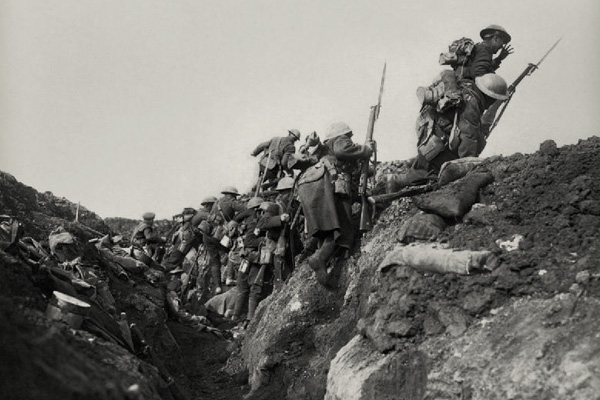
WWI-troops-over-the-top-070116hr


Lucifer vs. Tit for Tat

During the Cuban missile crisis in the early 1960s, social scientists were working on how to respond to the nuclear threat in ways that would stop either side from blowing up the world. If you remember those days, it looked like this: both sides had enough weapons to completely destroy the other side. If one side fired their weapons, then the other side would retaliate, and fire their weapons, and if that happened you could kiss the planet goodbye. The name for that was Mutually Assured Destruction, or MAD, appropriately named.

We would build bombs, and the Soviets would build bombs. We build more bombs the Soviets build more bombs. So we build more, and the soviets build more…and so on and so on. The problem is, the bombs that are out there, the greater the possibility they would be used one day. As long as the two nations cooperated, in other words, did not use their weapons, their would be peace. But if a nation defected from the status quo, and attacked, the peace was broken.

When the soviets put missiles into Cuba, that threaten the uneasy peace. During that time, a mathematician and early computer geek, Robert Axelrod devised a computer experiment learn about a simple strategy to navigate the waters of cooperation and betrayal, that might help political leaders navigate the tricky waters of the nuclear dilemma. Axelrod put out a call for other computer geeks to write programs that would compete against each other. The programs that did the best to keep the peace would be declared the winner.

There were three basic types of programs. The first, he called Jesus. Jesus did not attack and did not retaliate.  The second he called Lucifer. Lucifer would attack and keep attacking for the duration of the game. The third was called Tit for Tat. It did not attack, but if attacked, it would retaliate for only one move. He ran these programs against each other 120,000 times. The results were mostly predictable. When Jesus ran into Lucifer, Lucifer no one would win. When Jesus went up against Tit for Tat, it was a drawn, with no battles. But when Tit for Tat went up against Lucifer, Tit for Tat always won–if there were enough Tit for Tat players in the game.

In other words, in Axelrod’s computer simulation, if enough players in the game were peaceful and only retaliated to the extent that the other programs retaliated, they would win. Axelrod wrote several scholarly articles about this that appeared in academic journals of the time, but he wondered if these results were valid in the real world. So he did some historical research.


Then Axelrod took it to a second level. Programs that did well were able to reproduce.


The program was simple. It was a computer tournament, where computer programmers wrote programs that competed against the other programs. Each program competed with the other programs 200 times. There were three basic types of programs. The first was, the program would cooperate with other programs, until  attacked, and if that program was attacked it would retaliate and continue to retaliate for the duration of the game. The second type was one that attacked first, but then, when it was attacked by other programs, would chill out, and not retalition.


He wrote a program where the characters had one of three basic orientations. The first was attack, and retaliate with everything you got. He called this the Lucifer character. The second was do not attack, but if attacked retaliate with equal force. The third was, do not attack and do not retaliate if attacked. He filled a simulated world with these three characters, and run the program to see what would happen over time. The characters in the program had a limited life span, but they could produce other characters within the program, that shared their characteristics.

He ran several different versions of the same programs, with differing numbers of each of the three characters. When they were all Lucifers, they all died off really quickly. If they were all


World War I

In World War I soldiers were hunkered down in trenches that were 50 to 250 yards from each other. There was a constant barrage of artillery and gun fire that was unending. If one side was firing, the other side was firing back, and since one or the sides was always firing, the gunfire never stopped. But there were times of relative quiet. It started at night, when the british troops started taking breaks for meals. They would the trenches get some food, and come back. Here is the interesting thing. The Germans could have just lobbed bombs over the trenches, and onto the food trucks, killing a much greater number of soldiers. But they didn’t. Instead, they started taking breaks for meals. Again, the British could have lobbed their bombs over the trenches and onto the eating soldiers, but they didn’t. One soldier noted that either side could have aimed their shells at the meal caravans on the other, and in so doing would inflict incredible damage, but they realized if they did, the other side would retaliate in kind, and no one could have a meal in peace.

A similar thing happened with snipers. The success of a sniper is the number of men he can kill. German snipers started firing, not at the soldiers, but at trees beside the soldiers. And they would fire repeatedly into the tree at the same, exact spot, proving they could have hit the men standing there, but they chose not to. British snipers picked started also firing at trees, not at people.

There were times when one side or the other would raise a white flag, and the other side would simply stop firing, until the side that raised the flag started firing again.

This all came to a head in the Christmas truces of 1915. As the story goes, it was Christmas Eve night and the British stopped firing. The Germans followed, and each side was allowed to celebrate Christmas in peace. In one area the British started singing Silent Night, and the Germans retaliated by singing Stille Nacht, Silent Night in German. The next day there was no gun fire. Along the lines soldiers started  popping their heads up above the trenches, and were not shot at. Instead the other side would pop their heads above the trenches. In some areas soldiers got out of their trenches, and met the enemy in the middle of no mans’ land. They exchanged pictures of their families, food, and even Christmas presents. Instead of the hellhole it had formerly been, in many areas No Man’s Land became a place of peace on earth, good will to men. This Christmas truce lasted up to two weeks in some places, and soldiers would compete playing soccer, not killing one another.


Not until the British started taking breakfast breaks. Unilaterally, they stopped firing during breakfast, so the men could eat. It did not take long for the


the Mighty Mites

What does this have to do with the Widow’s mite, as we heard in this morning’s Gospel lesson? Simply this–these kinds of reciprocal Tit for Tat arrangements, whether in computer games or in war, only work when there are a enough people on one side to start the ball rolling. One person could not affect a Christmas truce, but a battalion could. If one person stopped shooting, they would probably get shot. But when a hundred men stop shooting, the shooting tends to cease. It’s not magic. It does not always work out this way. But it tends to, and the fact is, only by having one side change the rules of engagement can the rules of engagement every change.

The widow put in one mite, one small penny, one tiny coin into the offering plate. One mite cannot change anything. But a hundred mites can. A thousand mites can. The one small mite can be meaningless but the many mites can become mighty mites.

Let’s go back and look at the story. There is a line of people putting money into the temple treasury. Many of them are rich people, and they put a hefty amount of money. But then, along comes this widow. She does not have much. She is poor. She places two small coins into the pot, valued at about a penny. But this is who Jesus praises. She did not have much, but what she had, she gave. The temple is not going to get rich on her mite. But she gave what she had. In raw numbers it was a pittance, but in percentages it was a treasure house of good.

That is all that is required of us–to give what we have. I know this is stewardship season, and this all could be taken to mean that you have to give more money. So be it. But it is bigger than that. It is not just our money that makes a difference. It is our lives.

When the woman gave her mite, I wonder if there were other people, who had much more, who also gave of what they had? I wonder if other widows say they could give to. Jesus set up a situation that allowed and encouraged people to give what they had. He still does that. The woman answered the call to give by giving sacrificially. And Jesus responded, not by belittling her gift (“You call that a donation?”) but by praising her.

The way we respond to people, including aggressive people, is crucial. The rule of thumb is, people will respond with what we give them. When we are in an argument, if we can be the reasonable ones, if we can keep our heads when others are losing theirs, if we can give from the well of love that lies within us, we then can change the situation. If we see a wrong that needs to be righted, if we give what little we have, if we respond by an outpouring of love and not of recrimination, if we respond with offers of peace in the face of turmoil, we can change our worlds.


postscript

There is a postscript to the World War I stories, a tragic one. The generals on both side were concerned about these random acts of peace. They were there to win a war, and you don’t win wars by celebrating Christmas with your opponents. If you have seen pictures of your enemy’s children, you are much less likely to want to shoot and kill him. The generals understood what was going on better than the men in the trenches. They understood that how their men reacted determined to a large degree how the enemy would react. They understood that if the enemy stops shooting at you, you are highly likely to stop shooting at him.

So one night, after New Years, British soldiers played a German patriotic song. The Germans stood up on the edge of the trenches to hear. And at the last note of the song, the British troops were ordered to fire at the unarmed German soldiers, killing most of them. As you can imagine, the Germans responded with fire of their own, and the brief outbreak of peace among the enlisted men was quickly shattered, and the men got back to the things as usual–killing as many of the other side as they could. There were no more informal truces, meal trucks were not longer safe, and it was not long before poison gas was floating over the trenches.

Because of the horrific nature of that war, it was called the war to end all wars. We know that was just optimistic thinking. The men who saw to the end of WWI kept retaliating, even after the war’s end, with the Treaty of Versailles, which basically destroyed the German economy. That in turn led to many of the conditions that started World War II. Fortunately we learned a lesson from the ending of the First War, and instead of a punitive treaty, like Versailles, we instituted the Marshall Plan, and rebuilt Europe and Asia, including Germany and Japan.

Our mite, what we have to offer, is to respond as Jesus would in world where others are bent on doing any but that. In our relationships with each other here, in our relationships with others outside of these walls, in our relationships with our enemies, we are called to respond as Jesus would respond. One person doing that would be run over by the effects of the world. Two people are an example. Three people stand a fighting chance. A church full of people grabs attention, and a world of Christians who act as Jesus would act can change the world.

When each gives their own mite.

Amen.
Posted in Church, Church Growth, Community, Compassion, Courage, forgiveness, Jesus, ministry, Mission, Pastoral Ministry, Preaching, Sermons, Social Justice, Social Ministry, spirituality, Theology, Wealth | Tagged , , , , , , , , , , , , , , | Leave a comment

Evangelicals Today

I used to consider myself an Evangelical. But then came the Moral Majority, and the politicization of faith. I felt more and more uncomfortable with my colleagues, and able to say less and less about them. I watched them head off into a different sunset. I no longer need a label to define my approach to faith.

Here is an interesting article about young Evangelicals today. May God be with them!

Posted in Uncategorized | Leave a comment

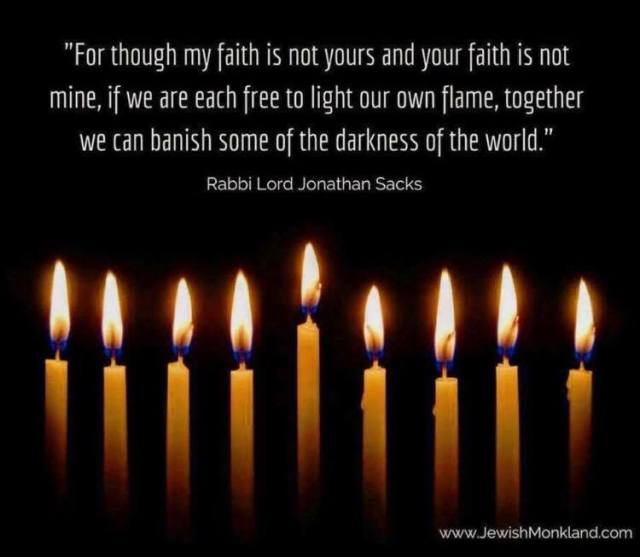
A Call to Walk in the Light

45060154_2375817712447619_1055306054839042048_n

Posted in Uncategorized | Leave a comment

The Abundance of Little

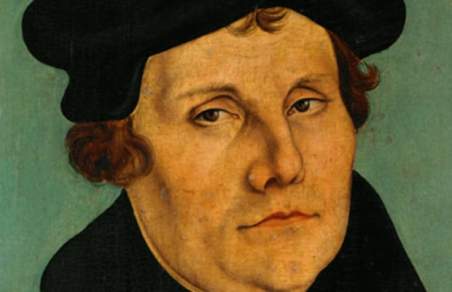
martin-luther-9389283-1-402

In 1521 the monk Martin Luther was called to give account for his radical new teaching at the unfortunately named Diet of Worms. There were no worms eaten at the Diet of Worms. The Diet was what they called the Imperial Assembly, and it took place in the German city of Worms–in English, Worms. At the Diet, Luther was told that his books were heretical, and told he must recant, or he would be punished. He had already been excommunicated. Here he was, a poor monk, with nothing really to his name, and now he had lost the only worldly thing that mattered to him–his job as a teacher in the Augustinian seminary where he lived. If he recanted there was the possibility that he could retake his position at the seminary. If he did not, he would be a permanent outcast.

Luther was given a night to consider his position. In the morning he was called back into the Diet, and asked again if he would recant. He said, Unless I am convinced by the testimony of the Scriptures or by clear reason, I am bound by the Scriptures I have quoted and my conscience is captive to the Word of God. I cannot and will not recant anything, since it is neither safe nor right to go against conscience. May God help me. Amen.

Some record that he also said, Hier stehe ich. Ich kann nicht anders, or in English, Here I stand. There is nothing else I can do.

As he uttered those words, he had nothing. He could not go back to the monastery since he was excommunicated. He could not go back home, because he would be arrested, tried, and possibly killed for heresy. He had the clothes on his back, and, fortunately for him, the support of prince Frederick III, the Elector of Saxony, who abducted Luther, and took him to his castle at Wartburg. There, living on the good graces of Frederick III, he started his translation of the Bible.

In earthly terms, Luther never really had a lot. But he had faith, he had conviction, and he had the power of God.

Later he would write:

Let goods and kindred go,

This mortal life also:

The body they may kill:

God’s truth abideth still,

His kingdom is for ever.

john-calvin-9235788-1-402In 1530, a young man named Jean Calvin fled Paris after some riots by a small band of the new sect of Christians who were influenced by Luther. It’s not clear he was in the riots, but the backlash against them made every Protestant fear for their lives, and Jean, who was an attorney at the time, became a refugee, and made his way to Basel, Switzerland, where he joined a group of the Protestant leaders. We know this man better as John Calvin, the founder of the Presbyterian Church. The Protestant movement had grown, and there were now Protestant enclaves throughout Germany and France. What Luther started had taken off in a big way. But there were problems with the emerging movement. Luther never intended to start a new denomination. He had no idea what a denomination was! There was only the Catholic Church, and all Luther wanted to do was reform the corruption he saw in the Catholic church. Luther was a theologian, but his approach to theology was more practical than systematic. He dealt with problems as they arose, but did not provide a theological architecture for the new Protestant movement.

Calvin wanted to design the new theology. He wanted to take Luther’s original precepts and turn them into a systematic theology. In Basel, Calvin set to work on his task, but was interrupted by a visitor from Geneva, William Farel, who finally convinced Calvin to move, and become of the pastor of the church in Geneva. Calvin didn’t really want to do that. He just wanted to write, but Farel was convincing.

His stay in Geneva was a disaster. Calvin wanted to build a new church, but the city council of Geneva, who made all decisions concerning the church, opposed him at every front. For instance, Calvin wanted to have weekly communion. The city council limited to communion to four Sundays a year. Calvin wanted the city to close the bars of the town on Saturday night, so people would not come to Church hungover on Sundays, but the city council refused to do so. When Calvin finally refused to serve communion to the bar owners, both he and William Farel were fired and banished from the city.

Which was fine with Calvin. He moved to Strasbourg, where he pastored a church of French refugees and wrote theology.

But he was called back to Geneva, and lived the rest of his life there. He continually fought with the city council on various issues pertaining the church. He rarely won, but he persisted.

At every turn in Calvin’s career, he was interrupted or thwarted. He wrote his books, and preached sermons. He visited parishioners, and led worship. But his dream of being the architect for the new Protestant Church was never fully realized in his lifetime. In spite of all the setbacks he experienced in life, he said this:

Seeing that a Pilot steers the ship in which we sail, who will never allow us to perish even in the midst of shipwrecks, there is no reason why our minds should be overwhelmed with fear and overcome with weariness.


#

We look a the legacy of Luther and Calvin today, and we wonder that either ever doubted their impact on the world. Both Lutheran and Calvinist churches speard over the entire world. Both could be said to have changed the course of history. The movements they started have lasted for almost 500 years, and show no sign of stopping. By almost every measure, they would be considered a success. But it did not feel like it to them at the time. They could not see into the future. They could not know that the movements they started would survive.

But they had faith. They had conviction. They had a firm belief that God would take what they offered, and use it to help build the Kingdom of God. They both knew that God was at the helm, in spite of all the difficulties and dangers that surrounded them. They may not have been sure of their own successes, but they trusted in God, and knew that God’s work would never fail. They knew that God’s provision for them would never end. Again, as Luther wrote:

And though this world, with devils filled,

Should threaten to undo us,

We will not fear, for God hath willed

His truth to triumph through us.

And God’s will does triumph–through us.

It does not always seem that way. This week, for example, we see the world with devils filled. First, the assassination attempts in the form of the 13 bombs that were mailed to ex-presidents, vice-presidents, senators, and others. If you kept up with the news, every day brought new potential victims. And just as that nightmare appeared to be at an end when the arrested the culprit, we heard about the horrific shooting at the Tree of Life synagogue in Pittsburgh.

It seems that there are too many devils in the world today. What can we do? There are too many devils, and not enough of us. We have so little, not near enough to face the multitude of problems in the world, or even just in our community. We can echo the words of the disciples in the Gospel lesson this morning: “We have nothing here but five loaves and two fish.”


#

This is a familiar story to most of us. Jesus, trying to get away from the crowds, hops in a boat, and heads for a deserted place. But someone must have figured out where he was going, and they headed for the same place Jesus was. When he came ashore there was a crowd of needy people waiting for him. And Jesus had compassion on them. He ministered to them. The sun started to set, and the people were still there. It was getting to be dinner time, and the people were still there. “Send them home,” said the disciples. “They need to eat, and we can’t feed them.”

You may be wondering why there was no food. There were little towns dotting the Sea of Galilee. Why couldn’t the people get something to eat there. The answer is, they could. But there was one problem with that. You see, when it says that Jesus went to a deserted place, the place was probably in the Decapolis. The Decapolis was a region that bordered the eastern side of the Sea of Galilee, and was a Gentile region. They was food there, but not the kind of food that the Jews could eat. Had Jesus sent them to the closest town to round up some grub, he would be sending them to break the kosher laws. They might have good barbecue joints there, but the Jews were not allowed to eat pork. And pork was a common food among most non-Jewish people.

So what to do? There were too many people, too many problems. The only way, it seemed, to help the people would involve breaking the Law of God.

But Jesus had another solution. In the eyes of the disciples there was not enough. In the eyes of the disciples, the problem was too big, the needs were too great, and they did not have enough resources to do anything about it.

But Jesus had other ideas.

“You have everything you need,” he says. “Just give it to me, and stand back and watch.”

And we know what happens next. The five loaves and two fish turn into a feast for all, with twelve baskets full leftover.

#

There are those who say that what happened was that the people saw Jesus take what he had, and start to feed others, and when they saw that, they opened up their hearts, and their own stash of food, and all of sudden everyone is feeding everyone else. Maybe that is what happened.

Or maybe Jesus was able to draw on the power of God to serve the people. Maybe there was not other food there, and Jesus pulls the proverbial rabbit out of his hat–although in this case it is fish and bread, not a rabbit.

Whatever you believe about what really happened that, in any event it is a sign that God uses what we have to minister to people. Where we might see little, God sees an abundance. We might look around and say, “There’s not enough!” but God never does. I wonder if Luther ever looked around and said, “How can I do this? I am one person against the Roman Catholic Church, the largest organization in the world. There’s no way!” If he did, he never acted on his fears. He never acted on his feelings of being one very small fish in an ocean of sharks. He did what he felt God was calling him to do.

I wonder if Calvin ever thought, “I have no power here. They fired me once. They could fire me again. The city council holds all the power, and I have none. How can I do this?”

If he did, he never acted on that. He went on doing what he felt God was calling him to do.

Both Luther and Calvin depended on the power of God to do the work they were called to do. They did not focus on what they did not have. They focused on what God would give them. The fact they had little only encouraged them to focus on God’s abundance.

#

I look at the problems of the world, and I say to myself, “What can I do? The problems are so great, I am am so little.” I look at the problems in our community–drug addiction, housing shortage, food insecurity, that fact that you hit five red lights in a row when you travel down 10th Avenue, and I ask, “What can I do? These problems are so large, and I am so little.”

I look at the problems facing the Church of Jesus Christ today–declining membership, aging population, and a society that is growing increasingly secular, not to mention that fact that the political debates in our country have started to become church debates, and I ask, “What can I do? The problems are so large, and I am so little.”

But when I see how little I am in the face of all these, I am reminded of God’s abundance. I may not have enough, but God does. I may be little, but out of my smallness we can see the abundance of God.

We need not look at the world and despair. We need not look at the world, and throw up our hands, and say, “nothing can be done.” Out of our little comes God’s abundance.

This is stewardship Sunday. We will have a dinner, and then we will take pledges over the next couple of weeks. I am supposed to stand up here and say, “Give! Give! Give!”

But I don’t need to do that. You are generous givers.

But I want you to know that whatever your level of giving to this church, and to other causes you support, God’s abundance is there. I have quoted from the song, A Mighty Fortress Is Our God. The Psalm we read is what Martin Luther based his hymn on. I just want to revisit one passage from the Psalm:

Come, behold the works of the Lord;

… 9 He makes wars cease to the end of the earth;

he breaks the bow, and shatters the spear;

he burns the shields with fire.

10 “Be still, and know that I am God!

Yes the problems are many. Bombs are sent, and synagogues are attacked. The problems of the streets occasionally make their way into our church. We may feel small in the face of them. We may feel that all we have is two fish and five loaves of bread. But out of our little comes the abundance of God.

Amen.

Posted in Church, John Calvin, Martin Luther, ministry, Pastoral Ministry, Presbyterian, Reformation, Sermons, Theology | Tagged , , , , | Leave a comment

Free Book!

IMG_1769

So, my copies of the my book Wrestling with the Word finally arrived! I am offering a free copy to the first ten people who message me, via my Facebook page (https://www.facebook.com/thestillpoint3/), or who email me at thestillpoint3@gmail.com. You will receive a signed copy within two weeks, via USPS.

I do ask, if you get a free book, to please post a review on Amazon. It should be an honest review, but please post a review. Oh, and if you do like it, tell your friends. The book is available on Amazon.

You need to message or email me your name and your mailing address.

I am looking forward to getting your feedback!


Posted in ministry, Preaching, Sermons, Spiritual Growth, Wrestling with the Word | Tagged , , | Leave a comment

Fishers of People

fisherman-2739115_1280

Posted in Church, Church Growth, Community, Jesus, Meme, ministry, Mission, Spiritual Growth | Tagged , , , , , , | Leave a comment

Making the Right Mistakes

download1

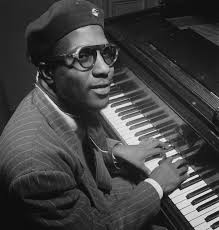
The great jazz musician Thelonious Monk once told one of his sidemen, “You’re making all the wrong mistakes!”

Monk was known as musician who did things differently, who played with a kind of dissonance that sounded like he was making mistakes, but which actually worked. He generally made all the right mistakes. I read that quote and realized there are right and wrong mistakes. It’s OK to make the right mistakes; we just don’t want to make the wrong mistakes.

I have made my share of wrong mistakes. When I was a rookie pastor, I told a parishioner that I had done something, when I really hadn’t done it. I was going to do it. I had every intention of doing it, and doing it quickly. But in the rush of all things I had to do, this fell between the cracks. The fact that I hadn’t done it was not an issue. The fact that I lied when I said I had done it was. It became a big issue. That parishioner never really trusted me again. Call it a life lesson, but it was a very expensive life lesson.

What are the right mistakes?

I helped one of the street people who hangs out around our church into rehab. While he was there, I visited him every Sunday. When he had passes, I drove him around to run errands. I, and several other people in our church, worked on getting him housing, so he would not have to go back his old life on the streets. We invested a lot of time and energy into him.

He relapsed the very night he graduated from rehab.

He still comes by the church, and I always welcomed him, but I was hurt by the process. You might say it was a mistake to invest so much time and energy into someone who a) had a slim chance of making it, and b) could do nothing to return my investment. If it was, it was the right kind of mistake to make. In the mid-1990s I was offered the opportunity to leave my home state of North Carolina, where I grew up, went to seminary, and pastored two churches, the unknown wilds of Fairbanks, Alaska. Leaving my friends and relatives would be hard. There was the lingering question in the back of my head–what if this was a big mistake? What if I got to Alaska, and hated it?

In the end I decided to move from the Old North State to the North Star State. I figured I would rather do it, and have it fail miserably than spend the rest of my life wondering what my life might have been like if I had not taken the risk. (As it turned it, it was not a mistake, but hindsight is always 20/20.)

Caring too much is the right kind of mistake. Leaving 99 sheep to go after the one lost sheep is the right kind of mistake. Of course the difference between going after a lost sheep and going after a lost soul, is that the sheep is not likely to tell you to go to hell when you find it, while a lost soul might. That’s what might make it a mistake. Our church welcomed a homeless schizophrenic in our warming shop, and he repaid our kindness by breaking 11 windows. Maybe it was a mistake to welcome him, but it was the right kind of mistake.

Taking risks that enhance our faith are the right mistakes. Peter getting out of the boat to walk on the Sea of Galilee was the right mistake. Sure, he freaked out and started to sink, but what if he had just stayed in the boat?

Too often our churches make the wrong mistakes. We withhold caring, in case our caring might be wasted. We avoid risks, in case the risk does not work out. We hold our cards too close to the vest when we should be open and transparent, and get all transparent about things we should keep under wraps. We brag about the wrong things (size and economic status) and downplay or ignore the things that really count (the number of people are care for). I have made all these wrong mistakes in my time.

But at times I make the right mistakes. Maybe they are mistakes, but at least they are the right ones. Doing ministry without making mistakes is impossible. There are just far too many variables to be right all the time. So if we are to make mistakes, at least we can make the right ones.

Posted in Church, Compassion, Jazz, ministry, Mission, Musings, Pastoral Ministry, Social Ministry, spirituality, Thelonious Monk | Tagged , , , | Leave a comment

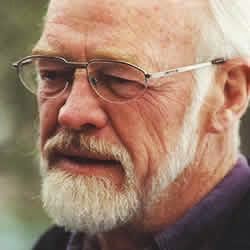
Let Us Now Praise Famous Pastors: Eugene Peterson

eugene_peterson

To avoid being swept along by the winds of change and conducting a ministry which is mostly improvisation, one must stubbornly one’s heels into the ground.

                   —Five Smooth Stones for Pastoral Care

More than once I have told people I perform my ministry standing on the shoulders of giants. There have been many giants in my life, but, when it came to the helping me understand and meet the demands of pastoral ministry, few have loomed larger than Eugene Peterson, died on Monday of this week. I originally went to seminary with the intention of going on for a Ph.D. and entering that hallowed halls of academia. It was not until my senior year of divinity school that I began to realize I would be following a different path, one that led into the parish. I was desperate for resources to help me in practical ministry, since I had spent most of my time studying “serious theology,” and Peterson was just the ticket.

The summer I graduated, I read Five Smooth Stones for Pastoral Care. To say that changed my whole approach to ministry would be an understatement. It took me from being the leader of my college Inter-Varsity chapter, to becoming a pastor, two very different things.

I found Peterson appealing for a variety of reasons.

He was incredibly well read, and as a reader, I respect that. I mean, how can you not love a man who pencils into his calendar a regular, two-hour appointment with FD three afternoons a week? (FD–Fyodor Dostoevsky, and he spent that time reading his novels.) Or who writes, “The first book on pastoral care that meant anything to me either personally or vocationally was Ulysses, James Joyce’s novel.” He was a sharp reader and taught me to be one. He taught me how take the books I was reading and apply to pastoral care. “Now, when I come across dull people,” Peterson wrote in Under the Unpredictable Plant, “I inserted into one of the novels to see what Dostoevsky would make of them. It wasn’t long before the deeper dimensions developed, the eternal hungers and thirsts—and God. I started finding Mozartian creativity in adolescents and Sophoclean tragedies in the middle-aged. The banality was a cover.”

He opened up these, and other authors, many of whom I had read before. But he brought them alive in a fresh new way. I remember the day I read his take on Wendell Berry—every time he used the word agriculture, Peterson wrote, substitute the word church. After that Berry become my second favorite writer on church work.

Peterson taught me a new way to approach the Scriptures. The two books I have mentioned were both developed out of exegesis. The five smooth stones of the title are five books of the Bible that can inform our pastoral care: Song of Songs for prayer. Ruth for story-making, Lamentations for pain sharing, Ecclesiastes for nay-saying, and Esther for community building. Under the Unpredictable Plant is in depth study of Jonah. Peterson wrote books on the Psalms, Jeremiah, more on the Psalms, and yet more on the Psalms. He taught me to pray the Psalms, not just read them. His exegesis was wide and rich. While he was always faithful to the text, he enlarged it for his readers. I learned to preach the way he wrote—taking a text very seriously, but also the context of the people hear the text. When I say he was faithful to the text, I do not mean he had a slavish devotion to the Bible. He surrounded himself in the text, he danced with it, he fought with it, and most of all, it was abundantly clear that he loved it.

Peterson taught be the value of long-term stability. In my thirty years of ordination I have seen many fads come and go. There was a time when we were all purpose driven, a time we were seeker friendly, a time when we were missional, a time when we were effective leaders, when we were servant leaders, when we were Emergent. We have four disciplines, then five, seven habits, and twelve keys. At one time everyone who came for pastor care was codependent. After that they were addicted to various things. Some were from Mars and some were from Venus. Most had been on the Road Less Traveled. In the flurry of such trends, Peterson reminded me that some things never change, and that there was more to gain by looking back than by just looking around. He taught to see the church, not as a project, but as a living organism, each with its own organic center. He taught me that each church was set in a certain soil, and some soils did grow some plants. He taught me to take the long view—the long view forward and the long view back. Being naturally attracted to “the latest thing,” this was probably Peterson’s best legacy to me in my ministry. Slow down. Listen to people. Study people. Know the Word. Know your church.

Peterson is best known today for his translation The Message. But for me his work about the Bible and his work on pastoral care were life changing. He was first and foremost a pastor. Yes, he was a writer. Yes, he was a sought-after speaker. Yes, he was a Bible translator. But above all that, he was a pastor. And I am a better pastor for having read him. And a better Christian.


Posted in Church, Eugene Peterson, ministry, Musings, Pastoral Ministry, Wendell Berry | Tagged , , , , , | Leave a comment

Leading From Below

Cross-Flag


An old friend of mine, Joe Moran, took his son to a Catholic worship service when he was visiting his family in New York State. Joe was a former priest, and his family was very Catholic. After Joe left the priesthood, he attended a Unitarian church, where they do not celebrate communion. The time came when the people went forward for the Eucharist, Communion, and Joe’s son watched as his cousins went forward, and naturally he wanted to go to. Joe told him to stay seated, because, he said, you have to be a Catholic to take communion here. That just made matters worse and the next thing he knew, his son was marching defiantly up the aisle, and took communion from the priest.

On the ride home Joe’s son asked why he was not supposed to take communion. “Because,” Joe said, “communion is a sign of the suffering and death of Jesus, and when you take it, you are committing your life to conform to that of Jesus, including his suffering.”

His son looked at Joe in horror, and said, “Now you tell me!”

Jesus and Power

In this morning’s Gospel lesson, Mark shows us how some of the disciples were still confused about where Jesus was heading. The story starts with James and John coming to Jesus and asking, “When you come into power, when you become our new king, we want to sit beside you on the throne, one on your left hand and one on your right.” They were still under the impression this was a political movement, and any day now Jesus would be declared king, set on the throne by God.

Now the irony of this is delicious. What happened just before the two brothers came to Jesus? Here are the verses that immediately precede the Gospel lesson.

32 They were on the road, going up to Jerusalem, and Jesus was walking ahead of them; they were amazed, and those who followed were afraid. He took the twelve aside again and began to tell them what was to happen to him, 33 saying, “See, we are going up to Jerusalem, and the Son of Man will be handed over to the chief priests and the scribes, and they will condemn him to death; then they will hand him over to the Gentiles; 34 they will mock him, and spit upon him, and flog him, and kill him; and after three days he will rise again.”

Here Jesus says explicitly what will happen to him when he gets to Jerusalem. King? Sure. His crown will be made of thorns and his throne will be a cross. It is right after this that James and John will come to Jesus and ask to be on his right and left hands as he is lifted up.

“Well,” Jesus says, “as matter of fact, you will drink from the same cup I drink from and you will be baptized, or immersed in the same waters that will surround me.And when I am lifted up, there will be two people on either side of me, but I don’t get to choose who they are.”  Jesus will have two people beside him, one on his left and one on his right, but they thieves, and are to be crucified with him.

Later, when both were undergoing times of persecution, and when both were martyred for their faith, I wonder if either of them remembered that conversation with Jesus, and thought,  “Now you tell me!”

And then, to make matters worse, the rest of disciples see James and John talking privately with Jesus, and they suspect something is going on. They suspect that James and John are making a power play, and they are angry–mostly because James and John beat them to the punch.

At that point Jesus looks and them, and says, “OK guys, huddle up.”

And then he gives them a life lesson. “What is it about the Romans that really burns you guys? It is that they take power, and they use their power to control you. They take your money through taxes, they regulate how and where we can sell things, and worse of all, they want us to worship their gods. But what is you want to do if we get into power? You want to do the same thing you hate the Romans for doing. You think real power is when you are able to tell people what to do. You’re wrong. Real power is the ability to serve others, not to control them. It doesn’t sound like you guys have figured all this out yet. I came to serve, not be to served, and when I leave, I want you to serve as I served.”

The Church and Power

In the first letter from Peter, he says, “Always be ready to make your defense to anyone who demands from you an accounting for the hope that is in you.” The word he uses for “always be ready,” is the same word they use for two gladiators who are about to fight to the death. In other words, we should muster all the strength we have to tell people about why we are followers of Jesus. We should be as ready to do that as a gladiator is when he is ready to fight.

But Peter does not leave it there. He continues by saying, “yet do it with gentleness and reverence.” In other words, we should be prepared to take someone’s head off with what we know about our relationship with Jesus, but when it comes to actually sharing our faith, we should do so with gentleness and reverence. The word he used for reverence is actually the Greek word phobos, which means fear. The power we have should be respected the same way a wise person respects fire.

In the Hebrews passage the author describes the duties of the High Priest. A High Priest was one of the more powerful people in Israel, similar to say, a Catholic bishop in medieval days. It would be like an adviser to the president today. But this is the job description of the High Priest: Every high priest selected to represent men and women before God and offer sacrifices for their sins should be able to deal gently with their failings, since he knows what it’s like from his own experience. But that also means that he has to offer sacrifices for his own sins as well as the peoples’.

Again we see that the use of power was meant to help people, not control them.

It seems Christians make two major mistakes when it comes to power. The first, and easiest to see, is how some have abused power over the ages. There are too many examples of this to list them all, and it happens in a variety of ways. The most egregious is when Church gets a hold of political power. Giving the Church the job of wielding political power is like giving an alcoholic the job of being a night watchman in a liquor store. You can be certain that abuses will occur. The Church has NEVER done well with political power. The Church was never meant to have political power, and when it does have it, the politics always outweighs spirituality. The demands of the politics take over the needs of the church. Political power is seductive, and it is all too easy to end with a faith that is led by political beliefs, instead of a political convictions that are informed by your faith.  Call me a pessimist, but when faith meets politics, the knee is eventually bent to the political altar, and not to God.

I’ve been reading a book about the fights between Catholics and Protestants during the English reformation, and the growth of Protestantism in France. Basically when one side comes to power, they would oppress the other side, usually in retribution for what happened to them when they were out of power. It was a see-saw of violence, that swung to and fro.

Pastors have abused power over the centuries; some to fleece their flocks of their money, getting rich off of the spiritual insecurities of their parishioners, telling them that giving to their ministry, and ultimately to them, assures them a place in the Kingdom of God. We have seen too many examples of pastors using their power to to sexually abuse parishioners, and it does not just happen in the Catholic church. There are too many examples of pastors turning their churches into a little fiefdom, where they control everything that happens.

But there is another problem with Christians and power. While some are busy chasing power, others don’t want to admit when they have it. I was in a small group Bible study in college. At the time I joined it, I was on the leadership council of our campus Christian fellowship, where I had a ton of responsibilities. When I joined the Bible study, I just wanted to sit back and listen. More often than, and you may have a hard time believing this, I just sat back and listened while other people talked. I had no desire to be a leader in that group. I was a leader in almost every other activity I was doing, and I just wanted to sit this one out, and listen. So I rarely engaged with the discussion. I just listened.

After a few weeks of this, I noticed that there was a tension in the group. I could not put my finger on what it was, until our adviser, a very wise man named Tom Newton, took me aside one day. “Why are you abdicating your leadership in that group?” he asked. I didn’t understand the question. He explained it to me. “You know more about the Bible than anyone else in that group, and yet you never join in the discussions. The other group members think you don’t like being in the group. They feel you don’t respect them.”

I had a position of power, and I did not use it responsibly. I wasn’t abusing my power. I was abdicating. I was being passive-aggressive. And that actually is an abuse of power.

In the years I have studied and practiced counseling, I learned something very interesting–a lot of people who claim they have no power, actually have more power than other people in their relationships. I was working with one family, and the mother kept claiming she had no power in the family. No one ever listened to her, and she never got what she wanted. But as I watched the family over time, it became clear to me that she more power in the family than any other family member. Her complaint that she never got her way led to other family members always giving in to her. In fact, using that complaint, she almost always got her way. By claiming she had no power in the family, she become the most powerful person in that family.

The rest of the family was growing increasingly angry at her, because of the mixed message of the family dynamic–Mom never gets her way, and because of that, Mom always gets her way. They were angry, but they didn’t know why.

You see each of us has some kind of power. When we don’t admit to it, things start to get dysfunctional.

Three Observations

I want to close with three observations.

The first, and most important is that as friends and followers of Jesus Christ, we should make sure that the power we have is always used to help others, not to control them. We lead from below. We lead by serving. We use what power we do have for others.

Second, we do have power. We are gifted by God, and that is where our power lies. It is not always power the way the world sees power. I would occasionally a church in college that was pretty free form. They had a band, and the first part of the service was all singing. That part of the service lasted about a half hour, and people, mostly college students like myself, would stream in at various times in the service. The sanctuary was pretty full, and as people came in, they had to look for a place to sit. There was one guy, an older guy, who stood at the back, and kept an eye on the seating. When anyone came in late, as I usually did (I was in college and it was an early service!) this guy would point you to an empty seat. In some ways he was one of the more important people on that ministry team. Without him there would be a constant jumbling of people trying to find seats. But with him there, exercising his spiritual gift, things always ran very smoothly.

He might not think he was one of the more powerful people in the room, but in spiritual terms, he was.

Finally, we have a source of power we can tap into–the power of God. Jesus, the Gospels, is frequently described as a person of power, and Paul fleshes that out in his letters. The power of Jesus is seen as he serves others, and seen ultimately in the cross. The power of God is not found in the great halls of the kingdoms of this world. It is not found in the White House, or in Congress, or in City Hall. There is a place for political power. I am not saying it is always bad. But there is no place for political power in the church. The power of God is seen in helping others. It is not a power you build up over time; it is a power we give away over time. It is the power to serve. And the more we do that, the more we experience the true power of the Kingdom of God.

Amen.

Posted in Church, Church Growth, ministry, Mission, Preaching, Presbyterian, religion and politics, Sermons, Spiritual Growth, spirituality | Tagged , , , , , , , | Leave a comment

What Does God Care About?

C Schiff Abstract Church

Posted in Church, Church Growth, Jesus, Meme, ministry, Mission, Presbyterian, Spiritual Growth, spirituality, Worship | Tagged , , , , , , , , | Leave a comment